
Why Scene Documentation Shapes Every Alaska Car Accident Claim
Key Takeaways: Documenting an Alaska car accident scene means capturing physical evidence, people, and official records before they disappear. Photograph vehicle damage, license plates, skid marks, road signs, weather conditions, and visible injuries, and gather names and contact details from independent witnesses. Note the other driver’s statements and any signs of impairment without arguing, and record commercial vehicle details like USDOT numbers when trucks are involved. Call the police, since Alaska law requires prompt notice, and understand that under AS 28.35.080(b) a driver must file a written or electronic report within 10 days for a crash involving injury, death, or property damage of $2,000 or more, unless a peace officer investigated. These administrative filings are separate from a civil claim, which generally must be brought within two years under AS 09.10.070. Scale your documentation to the crash severity and seek prompt medical care to protect your claim.
Evidence collected immediately after a collision often determines whether an Alaska car accident claim succeeds. Photographs, witness names, and official reports prove negligence, causation, and damages. Memories fade, vehicles get repaired, and skid marks wash away, so knowing what to do after a car accident in Alaska starts with disciplined scene documentation.
If you or a family member was injured, the team at Farnsworth & Vance can review your evidence and explain your options. Call us at 907-290-8980 or reach out through our online contact page to discuss your situation with an Alaska attorney.
Capturing the Physical Evidence Before It Disappears
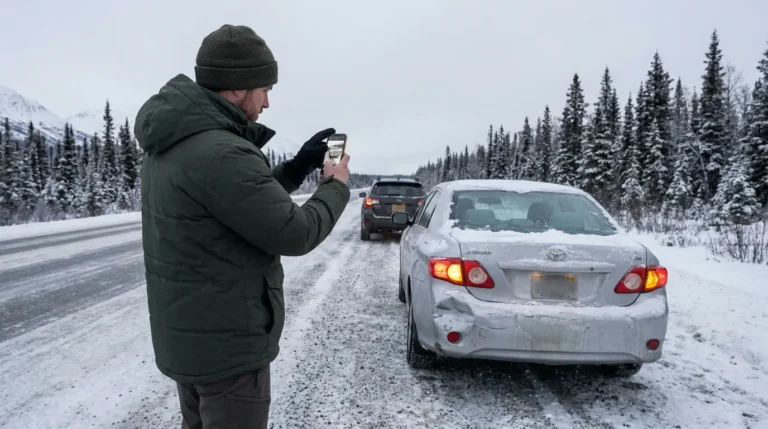
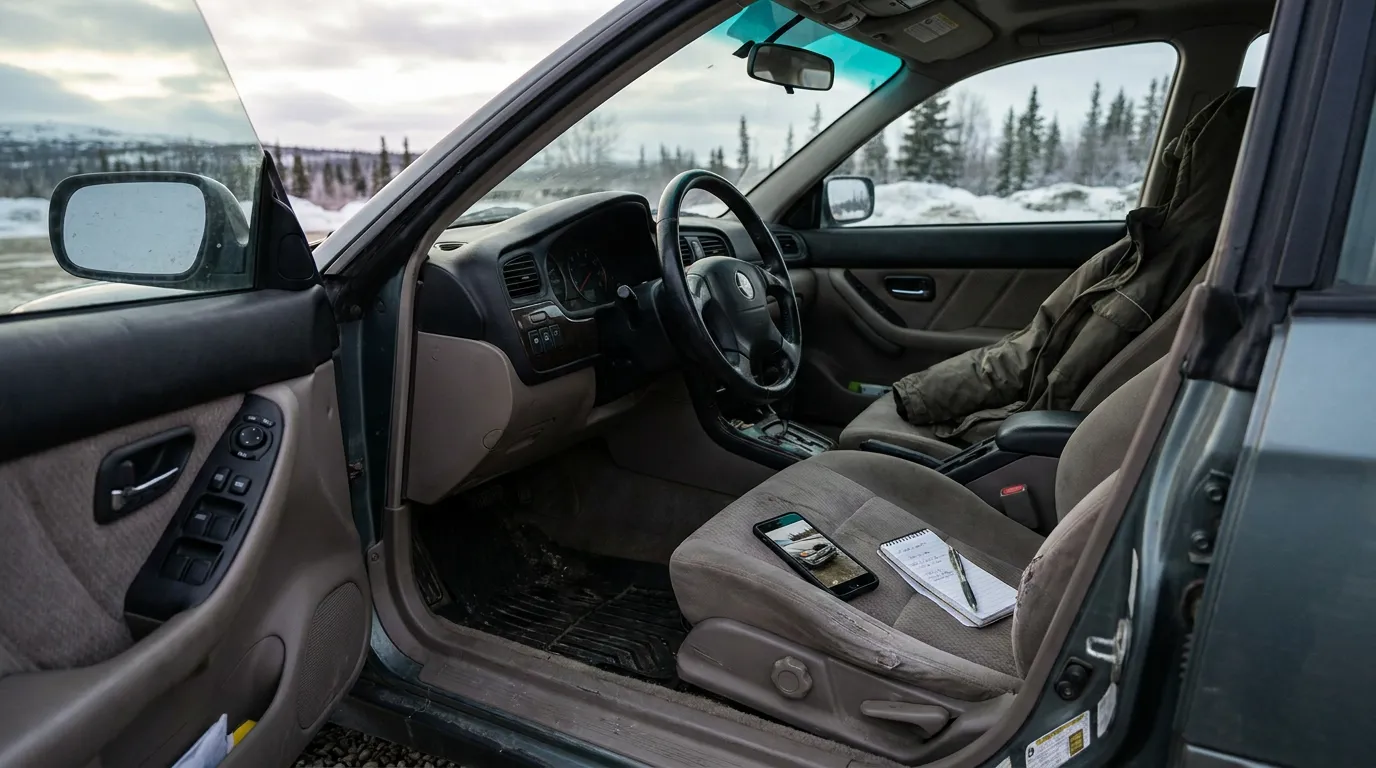
Photographs are the backbone of Alaska crash evidence and carry most weight when taken before anything is moved. Use your phone to record wide shots of the full scene and close-ups of every point of contact. Details like vehicle resting positions, travel direction, and damage angles can support or undermine competing fault accounts.
Beyond vehicles, the surrounding roadway tells its own story. Capture traffic signals, signage, lane markings, weather conditions, and debris. Road conditions themselves often become central issues. If a governmental entity failed to maintain a roadway safely or built a road with defective design, an injured party may recover damages against that agency, subject to special notice requirements and immunities governing claims against government bodies. This makes photographs of potholes, missing signs, or poor sightlines valuable when documenting a car accident in Alaska.
When organizing photos, a short checklist helps avoid gaps:
- Vehicle damage from all four sides, plus interior airbag deployment
- License plates, VINs, and any visible commercial or hazmat placards
- Skid marks, gouges in pavement, and final vehicle positions
- Road signs, signals, lighting, and weather at crash time
- Your own visible injuries and those of passengers
💡 Pro Tip: Photograph the other driver’s insurance card and driver’s license directly rather than copying numbers by hand. Clear images reduce transcription errors that insurers sometimes use to delay car accident claims in Alaska.
Recording People, Statements, and Contact Information
The people at the scene are often the most perishable evidence, so gather their information quickly. Independent witnesses with no stake in the outcome can be persuasive, and their accounts frequently determine how an adjuster or jury views disputed collisions. Write down names, phone numbers, and a short note about what each person saw.
Statements made at the scene matter as much as physical layout. Note what the other driver says without arguing or accusing. Signs of impairment deserve particular attention, because alcohol involvement remains a notable factor in serious Alaska collisions. Preserving observations about slurred speech, open containers, or an officer’s field sobriety testing can be relevant to liability.
Commercial vehicles introduce another documentation layer. Truck and bus collisions in Alaska frequently involve injuries and tow-aways, and responsible parties can extend beyond the driver to an employer or maintenance contractor. Record the company name, USDOT number, trailer markings, and whether hazardous-materials placards were present. These details help identify every potentially liable party.
Working With Law Enforcement at the Scene
Calling the police is both a legal duty and documentation strategy. Alaska law requires prompt notice in many crashes, and local agencies direct drivers to contact them immediately. Communities across the state, including guidance on the City of Nome’s vehicle accident information page, instruct drivers to call local dispatch for non-emergencies and 911 for emergencies, consistent with the immediate-notice rule under AS 28.35.080(a).
An officer’s involvement changes your paperwork obligations. Under AS 28.35.080(e), every law enforcement officer who investigates a qualifying motor vehicle accident must, within 24 hours after completing investigation, forward a report to the Department of Administration. When a peace officer investigates, the separate driver self-report may not be required, but never assume an officer responded to every incident, especially minor ones on rural roads.
Getting a copy of the official report takes a follow-up step. In many municipalities, drivers obtain their crash report by calling city hall during business hours to start a records request. Timing and procedures vary by agency, so confirm the process with the responding department. For a fuller walkthrough of first steps, review our guide on what to do immediately after a car accident in Alaska.
What to Do After a Car Accident in Alaska Once You Leave the Scene
Your obligations do not end when you drive away. Understanding what to do after a car accident in Alaska includes the state’s written-report requirement. Under AS 28.35.080(b), a driver involved in a crash resulting in bodily injury, death, or property damage of $2,000 or more must, within 10 days after the accident, forward a written or electronic report to the Department of Administration, and to the local police department if the accident occurs within a municipality. That report is not required if a peace officer investigated.
The state has streamlined this self-reporting process. Drivers can complete the required report entirely online using Alaska Motor Vehicle Crash Report Form 12-209. Guidance from the Palmer Police Department on the Alaska crash report form explains that the 12-209 can be submitted directly to the DMV, along with an included insurance form when needed.
These administrative filings are separate from any civil lawsuit. Submitting Form 12-209 satisfies a reporting duty to the state; it does not start a claim against the at-fault driver or preserve your right to sue. Alaska’s statute of limitations for most personal injury actions is generally two years under AS 09.10.070. Courts interpret tolling and discovery exceptions narrowly and may apply them only in limited circumstances, so treating the two-year window as firm is the safer approach.
Documentation Priorities by Injury Severity
Not every crash carries the same stakes, and your documentation should scale with potential harm. Alaska motor-vehicle crashes cause more than 60 deaths annually in recent years, which underscores why thorough records matter most in serious and fatal cases. The table below outlines general priorities; individual cases depend on their own facts.
| Crash Severity | Documentation Focus | Why It Matters |
|---|---|---|
| Minor property damage | Photos, Form 12-209, insurance exchange | Supports a straightforward car accident claim in Alaska |
| Injury requiring treatment | Medical records, witness statements, scene photos | Ties injuries to the collision for causation |
| Catastrophic or permanent injury | Accident reconstruction data, roadway evidence, long-term care records | Establishes lasting damages and full liability |
| Fatal collision | Complete scene preservation, official reports, all witnesses | Supports wrongful-death and survivor claims |
Medical documentation deserves the same rigor as scene evidence. Prompt treatment creates a record connecting your injuries to the crash, which is central to proving causation. Gaps in care give insurers an opening to argue that something else caused the harm, particularly in cases involving brain injury, spinal damage, or other permanent disability.
How an Alaska Firm Turns Documentation Into Leverage
Good evidence still needs someone who knows how insurers read it. Two of the attorneys at Farnsworth & Vance are former insurance defense litigators, and they now use that background to anticipate how carriers evaluate and challenge claims. That perspective helps identify which pieces of your documentation carry weight and where an adjuster is likely to push back.
Choosing a local firm over an out-of-state operation has practical consequences. An in-state attorney can visit the scene, work with Alaska agencies, and appear in the courts where your case would be filed. If you were injured and want to understand your options, speaking with an Anchorage car accident attorney at Farnsworth & Vance gives you a direct conversation rather than an online transaction.
Frequently Asked Questions
1. Do I have to file a crash report if the police already responded?
Generally, no. Under AS 28.35.080(b), the separate written or electronic report is not required when a peace officer investigated. Still, confirm that an official report exists, because assuming coverage that never happened can leave a gap in your Alaska accident documentation.
2. What is the deadline to file a car accident lawsuit in Alaska?
Alaska’s statute of limitations for most personal injury claims is generally two years under AS 09.10.070. Exceptions for tolling or delayed discovery are read narrowly by courts and may apply only in limited circumstances, so you should not count on an extension.
3. Can I recover damages if a bad road caused my crash?
Possibly. If a governmental entity failed to maintain a roadway safely or designed it defectively, an injured party may recover against that agency. Claims against government entities carry their own notice rules and deadlines that differ from ordinary civil suits, so document the roadway condition thoroughly and act quickly.
4. How do I get a copy of my accident report?
In many Alaska municipalities, you request a copy by contacting the responding agency or city hall during business hours to begin a records request. Procedures and timing vary by department, so ask the specific agency that handled your crash.
5. What if the other driver seemed impaired?
Note your observations and report them to the responding officer. Signs of impairment can be relevant to liability, and preserving details about the driver’s behavior, any testing, and witness accounts strengthens the record for an injured driver in Alaska.
Putting Your Documentation to Work
Thorough scene documentation is the foundation of a strong car accident claim in Alaska, from photographs and witness details to official reports and prompt medical care. State reporting duties under AS 28.35.080 run parallel to, but separate from, your right to pursue a civil claim within the two-year window under AS 09.10.070. Careful records protect that right and give your case its strongest footing, especially when injuries are serious or permanent.
If you were hurt or lost a loved one in a collision, discuss your evidence with a local team before deadlines tighten. Contact Farnsworth & Vance online, call our office at 907-290-8980, or learn more about our work on the firm’s website to speak with an Alaska attorney in person.