
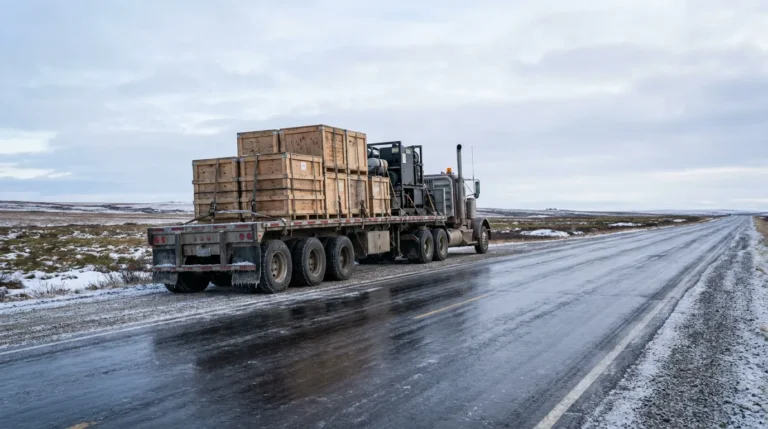
Ice, Big Rigs, and Fault on Alaska’s Toughest Road
Key Takeaways: When a loaded semi causes an ice-related wreck on the Dalton Highway, liability is analyzed under Alaska’s negligence principles, requiring proof of duty, breach, causation, and damages. Winter weather does not automatically excuse unreasonable driving, though statutory violations may be excused under Restatement §288A when a genuine emergency was not the driver’s fault. Alaska’s negligence per se doctrine streamlines proof when safety statutes are violated, while pure comparative fault allows recovery even when partly at fault. Responsibility can spread across the driver, motor carrier, maintenance provider, manufacturer, or general contractor under AS 09.17.900’s broad fault definition. Recoverable damages include medical costs, lost wages, pain and suffering, and occasionally punitive damages. A two-year statute of limitations applies, making early evidence preservation critical.
When a loaded semi loses traction on the Dalton Highway and causes a wreck, liability rarely rests with a single person. Responsibility can fall on the truck driver, motor carrier, maintenance contractor, parts manufacturer, or general contractor, often on several at once. Alaska sorts out blame through negligence and comparative fault rules, weighing each party’s conduct against the icy conditions expected in winter. Liability turns on who breached a duty of care and whose breach caused the harm.
If you or a family member was seriously hurt in a commercial truck wreck, the team at Farnsworth & Vance can review the facts and explain your options. Reach the firm at 907-290-8980 or through the online case review request.
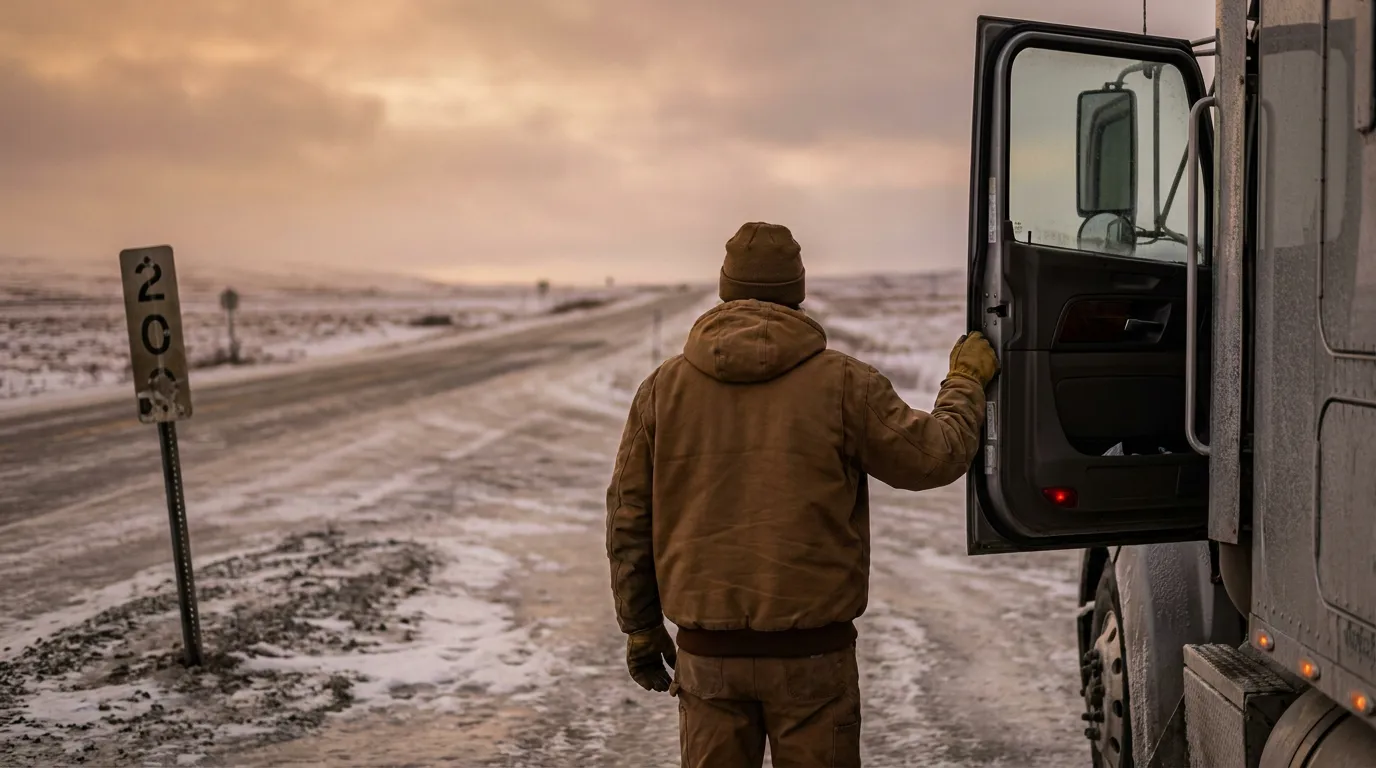
Why the Dalton Highway Multiplies Truck Crash Risk
The Dalton Highway is a mostly gravel, remote supply route where ice, steep grades, and limited services turn ordinary mistakes into catastrophic collisions. Commercial drivers hauling freight to the North Slope face black ice, whiteouts, and stretches with no cell service or nearby emergency response. When an 18-wheeler jackknifes or crosses the centerline, injuries are frequently permanent or fatal.
Winter conditions do not automatically excuse a trucker who drives too fast or ignores the road. Alaska law expects drivers to adjust to conditions, so a Dalton Highway truck crash caused by ice is analyzed under standard negligence principles. Bad weather changes the analysis but does not erase the duty to drive reasonably. This is a recurring question, and you can read more about whether negligence in dangerous weather can still exist when conditions are severe.
Proving Fault After an Alaska Ice Road Accident
Establishing liability in a negligence-based crash requires showing four things: duty, breach, causation, and damages. For an icy road truck collision, that generally means showing the trucker or carrier failed to act reasonably and that this failure, not just the weather, produced the harm.
The Negligence Per Se Shortcut
Alaska recognizes negligence per se, which streamlines proof when a defendant violated a safety statute. The Alaska Supreme Court adopted this doctrine in Ferrell v. Baxter, 484 P.2d 250 (Alaska 1971), holding that unexcused violation of a legislative enactment or administrative regulation is negligence in itself. You can review the scholarship explaining the Alaska negligence per se doctrine for a deeper look at how courts apply it.
Even a strong statutory violation does not win the case by itself. For negligence per se to apply, the statute must protect the class of persons and interest harmed and set a definite standard of care. Where a statute is not a perfect fit, courts may still let the jury consider the violation as evidence of negligence, and the injured person must prove causation.
When Icy Conditions Become a Legal "Excuse"
Alaska law allows certain excuses for a statutory violation, which is exactly the defense a carrier will raise after a winter crash. Drawing on Restatement (Second) of Torts §288A, a violation may be excused when the actor confronts an emergency not due to his own misconduct, cannot comply after reasonable diligence, or has a reasonable incapacity.
The excuse only works when the emergency was not the driver’s own doing. A driver who was speeding for conditions, exceeding hours-of-service limits, or operating on worn tires generally cannot claim the ice caught them off guard. Courts examine these excuses on a fact-specific basis.
Comparative Fault and Your Share of the Blame
Alaska uses a pure comparative negligence system, so more than one party can share fault, and your own conduct can reduce your recovery. This scheme traces to Kaatz v. State, 540 P.2d 1037 (Alaska 1975), and is codified through AS 09.17.060. Under the pattern jury instruction on comparative fault, a defendant must prove the plaintiff was negligent and that negligence was a legal cause of injury; courts publish this framework in Alaska’s civil jury instructions.
Being partly at fault does not bar recovery in Alaska. Because the system is "pure," an injured driver found 30 percent responsible can still recover 70 percent of damages. Alaska has abolished joint and several liability, so under AS 09.17.080 each liable party pays only its equitable share of damages, allocated according to its percentage of fault.
Who Can Be Held Liable in a Winter Road Truck Crash
Liability in a commercial truck crash often spreads across the supply chain, not just the person behind the wheel. Alaska defines "fault" broadly under AS 09.17.900 to include acts or omissions that are negligent, reckless, or intentional, as well as conduct that subjects a person to strict liability. That broad definition matters when a crash involves both driver error and a defective component.
Potentially responsible parties in a Dalton Highway truck crash may include:
- The truck driver, for speeding, distraction, or fatigue in violation of hours-of-service rules
- The motor carrier, for negligent hiring, training, dispatch decisions, or pushing unrealistic schedules
- A maintenance provider, for failed brakes, worn tires, or ignored repair records
- A parts manufacturer, if a defective component contributed to the loss of control
- A general contractor, where a work-related crash traces to disregarded safety policies
Work-related crashes carry a separate wrinkle for injured commercial drivers. Injured workers are generally barred by statute from suing their own employer and are limited to workers’ compensation, but they may still bring a third-party claim against another responsible party, such as a general contractor that failed to follow safety policies.
What a Truck Accident Lawyer Alaska Victims Trust Can Help Recover
A truck accident lawyer Alaska families rely on focuses on the full scope of harm, especially in catastrophic and wrongful-death cases. Recoverable damages can include medical expenses, rehabilitation, lost wages, pain and suffering, and, in narrow circumstances, punitive damages. For victims facing permanent disability, documenting future costs is central to the claim.
| Category | What It Typically Covers |
|---|---|
| Economic damages | Medical bills, rehabilitation, lost wages, future care |
| Non-economic damages | Pain and suffering, loss of enjoyment of life |
| Punitive damages | Reserved for reckless or outrageous conduct |
Punitive damages face a high bar in Alaska. Under AS 09.17.020, they generally require clear and convincing evidence that the defendant’s conduct was outrageous, including acts done with malice or reckless indifference to another’s interests, and 50 percent of any punitive award is deposited into the state general fund. Two of the firm’s attorneys are former insurance defense litigators who now use that background to counter the lowball tactics carriers and insurers often deploy after serious wrecks.
Deadlines and Evidence That Can Make or Break a Claim
Alaska sets a two-year statute of limitations for personal injury claims, and missing it generally bars recovery entirely. Limited exceptions, such as delayed discovery or claims involving minors, may apply, but Alaska courts interpret these narrowly.
Preserving evidence early is often decisive in a commercial truck liability Alaska case. Electronic logging data, maintenance records, load securement documents, and black-box downloads can disappear if no one demands their preservation quickly.
💡 Pro Tip: Send a written evidence-preservation request to the carrier as soon as possible. Logbooks and ELD data can be overwritten on a rolling schedule, and once gone, proving a driver’s fatigue or route becomes far harder.
Frequently Asked Questions
-
Does ice on the Dalton Highway automatically excuse the trucker?
No. Weather does not erase the duty to drive reasonably for conditions. A statutory violation may be excused under Restatement §288A only where the emergency was not the driver’s own misconduct.
-
Can I still recover if I was partly at fault for the crash?
Generally, yes. Alaska follows pure comparative negligence under AS 09.17.060, so your recovery is reduced by your percentage of fault rather than barred.
-
How long do I have to file a truck accident claim in Alaska?
Usually two years from the injury. Narrow exceptions like delayed discovery may apply in limited circumstances, but courts read them strictly.
-
Who besides the driver might be liable?
Often the carrier, a maintenance contractor, a parts manufacturer, or a general contractor. Because AS 09.17.900 defines fault broadly, multiple parties can share responsibility for one Alaska ice road accident.
-
Why choose a local firm over an out-of-state one?
A local Alaska firm knows the courts, the roads, and the winter-driving realities behind these cases. For serious injuries, working with an Anchorage truck accident lawyer who meets clients in person keeps your case grounded in the community where it will be tried.
Talk to a Local Alaska Firm Before the Clock Runs Out
Liability for a Dalton Highway ice crash comes down to duty, breach, causation, and damages, applied through Alaska’s negligence per se doctrine and pure comparative fault rules. More than one party can be responsible, evidence can vanish fast, and the two-year deadline leaves little room to delay. A careful investigation matters from the start.
To discuss a serious injury or wrongful-death claim with Farnsworth & Vance, call 907-290-8980 or use the firm’s confidential contact form to arrange a direct conversation with an attorney.