

Fatigue Behind the Wheel of an 18-Wheeler: Who Pays for the Harm?
Key Takeaways: When a fatigued semi truck driver injures an Anchorage motorist, Alaska law allows fault to be spread across the driver, the motor carrier, and other parties whose decisions contributed to the crash. A carrier can be independently liable for negligent scheduling, inadequate fatigue training, or ignoring hours-of-service violations, and AS 09.17.080(a) directs juries to allocate fault among everyone responsible. Proving fatigue depends on objective evidence such as ELD data, black-box records, dispatch logs, and communications, which can be overwritten quickly and must be preserved early. Injured motorists may recover uncapped economic damages, noneconomic damages generally capped at the greater of $400,000 or life expectancy × $8,000 (rising to the greater of $1,000,000 or life expectancy × $25,000 for severe impairment or disfigurement), and punitive damages only on clear and convincing evidence of outrageous conduct. Most claims must be filed within two years under AS 09.10.070(a). Because fatigue evidence disappears fast, prompt investigation and local legal representation are critical.
When a fatigued semi driver causes a crash in Anchorage, liability rarely rests on the driver alone. Alaska law allows fault to be spread across the driver, the motor carrier, and other parties whose decisions contributed to the collision. This post explains how that analysis works for injured motorists and their families in Southcentral Alaska.
If you were hurt or lost a family member in a collision with a commercial truck, the team at Farnsworth & Vance can review your options. Call 907-290-8980 or reach out through the firm’s contact page to speak with an Alaska attorney directly.
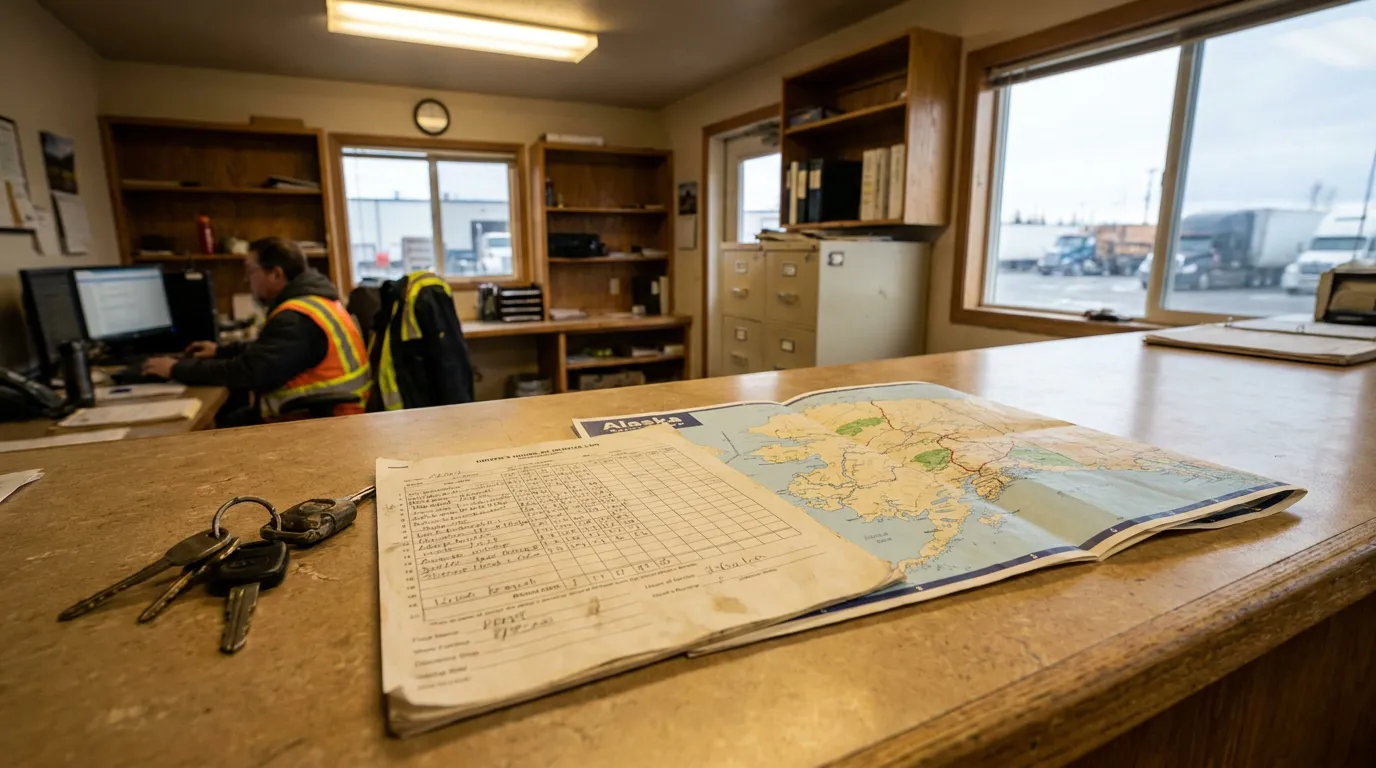
Why Fatigue Is Treated as a Serious Safety Failure
Driver fatigue is not a minor lapse; it is a measurable driving impairment. Research reviewing crash causation has found that driver fatigue is a contributory factor in approximately 20% of vehicle crashes. That figure establishes that a tired driver behind an 80,000-pound truck poses a foreseeable danger to everyone on the road.
The problem has proven stubborn compared with other crash causes. While public education and penalties have reduced some dangerous behaviors, similar decreases have not been seen in fatigue-related crashes, supporting the argument that carriers and drivers remain on notice of a well-documented hazard.
Sleep loss degrades the exact skills needed to avoid a crash. Studies show that fatigue increases lane drift, impairs speed control, and raises collision risk. Peer-reviewed work has drawn a striking comparison: in a study measuring fatigue against intoxication, driving performance after roughly 24 hours awake was compared to performance at a breath-alcohol level near a legal drink-drive limit, helping show that a fatigued semi driver operates negligently.
Building the Case Against a Fatigued Semi Driver
Proving driver fatigue starts with objective records, not guesswork. A driver fatigue truck crash case generally turns on documentary and electronic evidence tied to specific hours behind the wheel, reconstructing how long the driver had been awake and driving before the collision.
Several categories of evidence commonly matter in an Anchorage semi truck accident investigation:
- Electronic logging device (ELD) data and hours-of-service logs showing continuous driving time
- Black-box and engine control module data on speed, braking, and steering inputs
- Dispatch records, delivery schedules, and communications suggesting pressure to keep driving
- Fuel receipts, toll data, and cell records that can contradict stated rest periods
- Post-crash statements and medical records
Research supports why these records carry weight. Studies of real driving show that time spent continuously driving worsens sleepiness; one analysis found that time on task showed significant effects for subjective sleepiness, blink duration, lane position, and speed, and that night driving shifted lateral position. On-road studies also found that lateral vehicle control was severely impaired after a single night of sleep deprivation. This is the evidentiary rationale behind hours-of-service limits.
💡 Pro Tip: Send a preservation letter to the trucking company early. ELD and telematics data can be overwritten on a rolling cycle, and once it is gone, reconstructing the driver’s hours becomes far harder.
Carrier Negligence and the Employer’s Role
A motor carrier can be independently liable, not just vicariously responsible for its driver. Carrier negligence in Alaska often involves scheduling that made rest rule compliance impossible, inadequate fatigue training, or ignoring hours-of-service violations. When an employer’s conduct contributes to a crash, that conduct becomes part of the liability picture.
Alaska law directs courts to allocate fault among everyone responsible. Under CSHB 158(FIN), Sec. 12 amending AS 09.17.080(a), in actions involving fault of more than one person, the court instructs the jury to indicate the percentage of total fault allocated to each party responsible for the damages, regardless of whether the other person, including an employer, is or could have been named as a party. That framework is why fault can be split between a fatigued driver, the carrier, a maintenance contractor, or another party.
The gap between how a driver feels and how impaired they actually are is legally relevant. One study examined the association between subjective impairment and actual performance. If drivers routinely underestimate their impairment, a carrier’s reliance on drivers to self-report fitness becomes harder to defend as reasonable.
Talking to a Truck Accident Lawyer Alaska Victims Rely On
The strength of a claim often depends on how quickly evidence is secured. A truck accident lawyer Alaska residents consult early can move to preserve ELD data, request maintenance and logbook records, and coordinate accident reconstruction before the trucking company’s insurer builds its own narrative. Two of the attorneys at Farnsworth & Vance are former insurance defense litigators who now use that background against insurers, which shapes how the firm anticipates a carrier’s tactics.
Local representation carries practical advantages. Hiring a local Alaska truck crash lawyer means working with someone who appears in Southcentral courts, understands regional road and weather conditions, and can meet you in person. If you want to understand the firm’s approach to these matters, its overview for an Anchorage semi truck accident claim explains how it investigates carrier and driver liability.
What Injured Motorists Can Recover Under Alaska Law
Alaska allows recovery of economic and noneconomic damages, but noneconomic damages are capped. Under CSHB 158(FIN), Sec. 5 enacting AS 09.17.010(b)-(c), noneconomic damages such as pain, suffering, and loss of enjoyment generally may not exceed $400,000 or the injured person’s life expectancy in years multiplied by $8,000, whichever is greater, with that ceiling rising to the greater of $1,000,000 or life expectancy multiplied by $25,000 when the award is for severe permanent physical impairment or severe disfigurement.
Punitive damages are available only in narrow circumstances. Alaska requires clear and convincing evidence of outrageous conduct, limits such awards, and directs that one-half of any punitive award be deposited into the state general fund, under CSHB 158(FIN), Sec. 6-7 amending AS 09.17.020. Reckless disregard of fatigue or hours-of-service rules may, under certain circumstances, support such a claim.
| Damages Category | General Alaska Rule |
|---|---|
| Economic damages | Medical costs, lost income, long-term care; not capped |
| Noneconomic damages | Generally capped at the greater of $400,000 or life expectancy × $8,000; rises to the greater of $1,000,000 or life expectancy × $25,000 for severe permanent impairment or disfigurement |
| Punitive damages | Requires clear and convincing evidence; half goes to the state |
Preserving Your Claim Before the Deadline Runs
Alaska sets a two-year deadline for most injury and wrongful-death suits. Under AS 09.10.070(a), a person generally may not bring an action for personal injury, death, or property damage unless it is commenced within two years of the accrual of the cause of action. Missing this civil deadline can end a claim regardless of its merits.
Exceptions exist, but courts read them narrowly. In limited circumstances, a discovery rule or tolling may affect when the clock starts, yet these doctrines do not apply automatically. Any government administrative claim deadline is a separate matter from the civil statute of limitations. Reviewing your situation early is the safer course. You can read more general guidance on the firm’s injury law blog.
Frequently Asked Questions
1. How do you prove a truck driver was actually fatigued?
Fatigue is typically shown through hours-of-service logs, ELD data, black-box records, and schedules revealing how long the driver had been awake and driving. Research confirms fatigue is measurable during real on-road driving, not just in simulators.
2. Can the trucking company be liable even if the driver caused the crash?
Yes. Under Alaska’s fault-allocation rule in AS 09.17.080(a), a jury can assign a percentage of fault to an employer whose scheduling, training, or supervision contributed to the crash, in addition to any fault assigned to the driver.
3. Is there a limit on what I can recover?
Economic damages such as medical bills and lost wages are not capped, but noneconomic damages are generally limited under AS 09.17.010 to the greater of $400,000 or life expectancy × $8,000, with a higher ceiling for severe permanent impairment or disfigurement.
4. How long do I have to file a claim in Alaska?
Most personal injury and wrongful-death actions must be filed within two years under AS 09.10.070(a). Limited exceptions may apply, but courts interpret them narrowly.
5. Why hire a local firm instead of a national one?
A local commercial truck accident attorney can meet you in person, appears in Alaska courts, and understands Southcentral road conditions. That presence often matters when investigating and litigating a serious truck crash.
Moving Forward After a Serious Truck Crash
Liability for a fatigued semi driver’s crash generally reaches beyond the driver to the carrier and any other party whose conduct contributed to the harm. Alaska’s rules on fault allocation, damages, and the two-year filing deadline shape what an injured motorist can recover and how quickly they must act. Because fatigue evidence disappears fast, careful early investigation is what turns a claim into a documented case centered on lasting harm such as permanent disability, long-term care, and death.
To discuss a fatigued truck driver liability claim with an Alaska attorney, contact Farnsworth & Vance today. Call 907-290-8980 or use the firm’s online contact form to arrange a direct conversation about your case.


