

Understanding Your Filing Window After an Anchorage Commercial Truck Crash
Key Takeaways: Alaska gives truck accident victims two years to file a personal injury lawsuit under AS 09.10.070, and two years for wrongful-death claims under AS 09.55.580, measured from the date of death. Missing this deadline typically bars recovery entirely. Limited exceptions, such as the discovery rule and tolling for minors or incapacity under AS 09.10.140, may pause the clock, but courts interpret them narrowly. A separate 10-year statute of repose under AS 09.10.055 sets an outer limit. Winning requires proving negligence through duty, breach, causation, and damages. A truck driver’s unexcused violation of a safety law may establish negligence per se if a court adopts the statute as the standard of care. Acting quickly preserves critical evidence like ELD data, logbooks, and maintenance records that can be lost or overwritten.
Alaska generally gives injured people two years from the date of a truck crash to file a personal injury lawsuit. This deadline comes from AS 09.10.070, which requires that actions for personal injury or death be commenced within two years of accrual. For most Anchorage semi truck crash victims, that accrual date is the day the injury occurs. Missing this window can bar recovery entirely.
If you or a loved one suffered serious harm in a commercial truck accident, the team at Farnsworth & Vance is ready to help. Call us at 907-290-8980 or reach out through our contact page to discuss your situation while important evidence is still available.
Why the Two-Year Alaska Statute of Limitations Matters
The two-year deadline is a hard legal boundary with serious consequences. Under AS 09.10.070(a), a person may not bring an action for personal injury or death unless commenced within two years of accrual. Alaska guidance on civil claims explains that failing to file within two years generally forecloses any recovery whatsoever. You can review Alaska’s civil claim guidance for additional context.
This deadline applies to commercial truck accident claims because those cases are personal injury or wrongful-death actions. Whether your case involves an 18-wheeler, a multi-vehicle pileup, or a delivery truck, the same two-year period governs, though wrongful-death claims under AS 09.55.580 are measured from the date of death rather than the crash. Given the severe consequences of late filing, victims should treat the deadline as fixed unless a court confirms a specific exception applies.
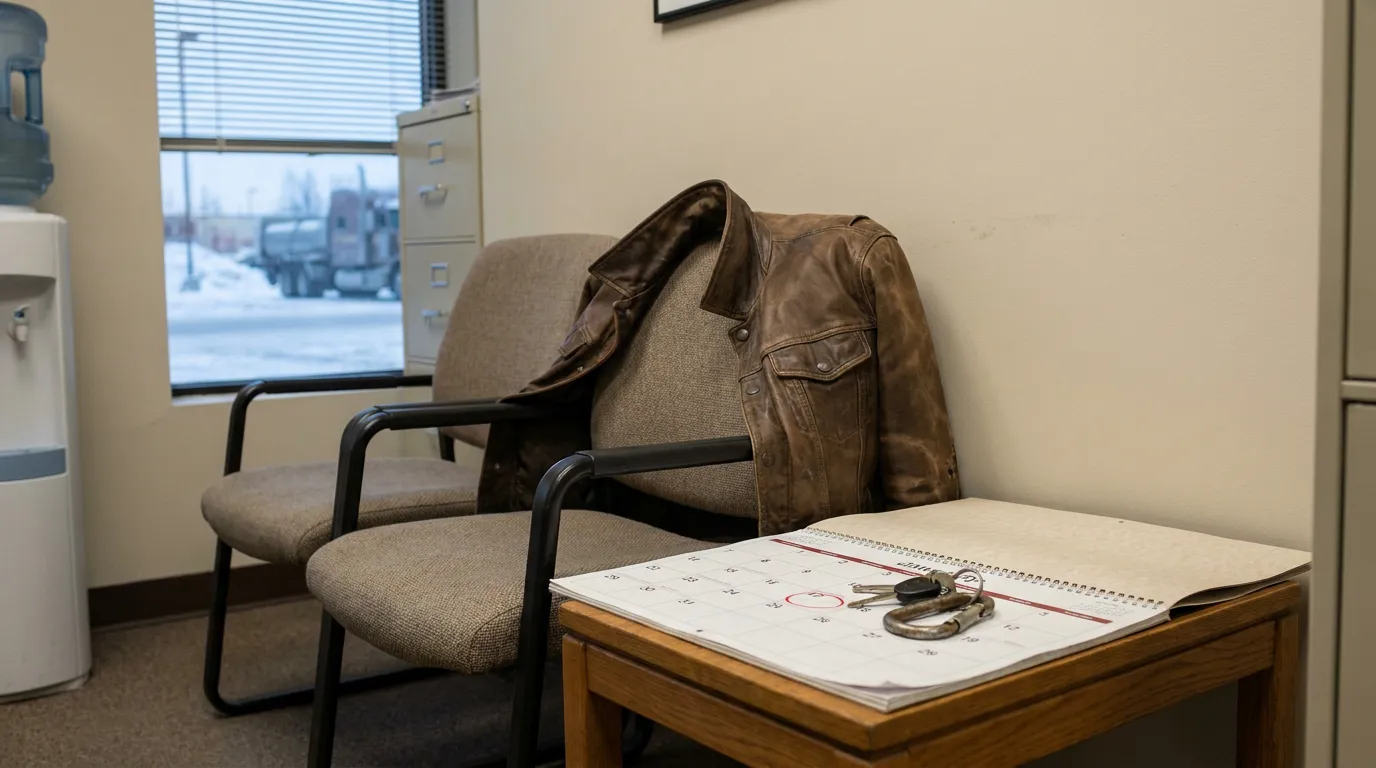
💡 Pro Tip: Write down the exact date of your crash and mark the two-year anniversary on a calendar today. Treat that date as your absolute internal deadline, and consult counsel long before it approaches.
Exceptions That May Pause or Extend the Deadline
Alaska recognizes limited exceptions that can pause or shift the two-year clock, but courts interpret them narrowly. These exceptions do not apply automatically. In many situations, the safest approach is to file within the standard two-year window.
Alaska civil guidance notes that the law provides exceptions when you did not know you had a legal claim within two years, or when the claim involves a minor, describing this as a complex area to review with an attorney. AS 09.10.140 addresses disabilities of minority and incompetency, which can pause the clock under certain circumstances.
- Discovery rule: In limited circumstances, the clock may begin when an injured person reasonably should have discovered the claim, rather than the crash date. Courts apply this cautiously.
- Minority and incapacity: Under AS 09.10.140, the deadline may be tolled for a minor or legally incompetent person, subject to statutory limits.
- Statute of repose: Alaska imposes a 10-year outer limit under AS 09.10.055, subject to exceptions for gross negligence, intentional acts, fraud, and certain defective products.
Because these rules interact in complicated ways and courts read tolling provisions strictly, confirm your actual deadline early. For a broader overview, see our discussion of the Alaska statute of limitations for personal injury lawsuits.
💡 Pro Tip: If a public entity may share fault, be aware that claims against the State or a municipality in Alaska follow the same standard two-year deadline under AS 09.10.070. Alaska does not impose a separate short pre-suit notice-of-claim requirement for injury lawsuits against government entities, but confirm any applicable rules with counsel as soon as possible.
How a Truck Accident Attorney Anchorage Victims Trust Proves Liability
Filing on time is only half the battle; you must also prove negligence. A skilled truck accident attorney Anchorage victims rely on will build the case around duty, breach, causation, and damages. Alaska civil authorities describe the elements necessary to establish negligence, including whether a plaintiff can establish negligence per se.
Negligence per se is a powerful tool in commercial truck cases. Alaska adopted this doctrine from Restatement (Second) of Torts §288B, under which the unexcused violation of a legislative enactment or administrative regulation adopted by the court as the standard of conduct is negligence in itself. This means a truck driver’s unexcused violation of an applicable safety or traffic law may itself constitute negligence.
The doctrine evolved from the Alaska Supreme Court’s 1971 decision in Ferrell v. Baxter, initially applied to cases involving violated traffic statutes, regulations, or ordinances. That framework maps directly onto motor vehicle and truck collisions. Later decisions, such as Breitkreutz v. Baker, clarified that a statute merely codifying the ordinary reasonable-care standard will not support a negligence per se instruction.
When a Court May Adopt a Safety Statute as the Standard of Care
Not every rule violation automatically becomes negligence per se; a court decides whether to adopt the statute as the standard of care. Alaska authority explains that a court may adopt a statute or regulation as the standard of care if its purpose is found to be exclusively or in part: (a) to protect a class of persons which includes the one whose interest is invaded, (b) to protect the particular interest which is invaded, (c) to protect that interest against the kind of harm which has resulted, and (d) to protect that interest against the particular hazard from which the harm results.
For truck cases, this can include violations of hours-of-service and maintenance requirements to load securement standards. These concepts are reflected in Alaska Civil Pattern Jury Instruction 3.04A, “Violation of Statute – Negligence Per Se,” published by the Alaska Court System.
The Difference Between Ordinary Negligence and Punitive Conduct
Alaska law sets a higher bar for punitive damages than for ordinary negligence. Alaska tort authority describes ordinary speeding as a classic example of plain negligence that generally will not warrant punitive damages. Proving a traffic violation may establish liability, but recovering punitive damages typically requires clear and convincing evidence of far more reckless or outrageous conduct.
This distinction matters when investigating carrier liability. Evidence of falsified logbooks, ignored maintenance failures, or knowingly dispatching a fatigued driver may support arguments beyond ordinary negligence.
Why Acting Quickly Protects Your Truck Accident Claim
Waiting until the deadline approaches can quietly undermine an otherwise strong case. Building a commercial truck accident claim takes investigation time. Alaska civil guidance warns that a diligent lawyer needs time to obtain police reports, medical records, and interview witnesses, and that waiting until the last minute does a disservice to your case.
Truck cases often involve time-sensitive evidence such as electronic logging device data, black-box downloads, driver logbooks, maintenance records, and cargo loading documentation. This evidence can be altered, overwritten, or discarded if not preserved promptly. Early legal action allows counsel to send preservation letters and pursue regulatory records before they disappear.
| Key Deadline | Statute | General Rule |
|---|---|---|
| Personal injury filing | AS 09.10.070 | Two years from accrual |
| Statute of repose | AS 09.10.055 | 10-year outer limit |
| Minority/incompetency tolling | AS 09.10.140 | May pause the clock |
💡 Pro Tip: Request a copy of the official crash report and keep every medical bill, photograph, and repair estimate in one folder. Organized documentation makes it easier to evaluate and support your claim.
You can review the full chapter governing these deadlines, including Alaska’s broader limitations of actions provisions. When you are ready for a case-specific review, an experienced Anchorage truck accident lawyer can help confirm your deadline and protect your rights.
Frequently Asked Questions
-
How long do I have to file an Anchorage truck accident lawsuit?
Generally, you have two years from the date of the crash. AS 09.10.070 requires a personal injury action to be commenced within two years of accrual, and wrongful-death actions under AS 09.55.580 generally run two years from the date of death. Because narrow exceptions may apply, confirm your specific deadline with counsel.
-
What happens if I miss the two-year deadline?
In most cases, missing the deadline ends your claim. Alaska guidance indicates that failing to file within the limitations period generally forecloses any recovery, subject to limited exceptions that courts interpret strictly.
-
Can the deadline ever be extended?
Sometimes, but only under limited circumstances. The discovery rule and tolling for minors or incapacity under AS 09.10.140 may apply. These exceptions are fact-dependent and applied narrowly.
-
Does a truck driver’s traffic violation prove my case?
It can help, but it is not automatic. Under negligence per se, drawn from Restatement (Second) of Torts §288B, an unexcused violation of an adopted safety statute may constitute negligence, though a court must first adopt the statute as the standard of care.
-
Why should I contact a lawyer soon after the crash?
Early action preserves critical evidence. Logbooks, ELD data, and maintenance records can be lost over time. Prompt investigation gives your legal team the runway needed to build a thorough commercial truck accident claim.
Protecting Your Right to Recover Under Alaska Law
Alaska’s two-year deadline under AS 09.10.070 is the foundation of any Anchorage truck accident claim. While exceptions like the discovery rule and tolling for minors may apply in limited circumstances, courts read them narrowly, so acting promptly is the surest way to protect your recovery. Combining a timely filing with a well-investigated negligence case gives victims the strongest footing to hold negligent drivers and carriers accountable.
If a commercial truck crash has upended your life, do not wait for the clock to run out. Contact Farnsworth & Vance today by calling 907-290-8980 or through our online contact form to discuss how we can help you pursue the compensation you deserve.