
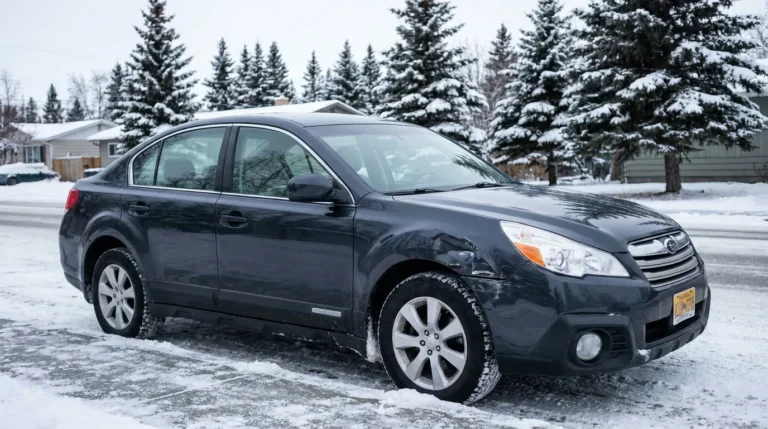
Understanding Compensation After an Anchorage Crash
Key Takeaways: Anchorage car accident victims can recover damages for bodily injury or death and property damage. Alaska separates injury compensation into economic losses (medical bills, lost wages) and noneconomic losses (pain and suffering), requiring verdicts to be itemized under AS 09.17.040(a). Noneconomic damages are subject to statutory caps, and punitive damages are available only in narrow circumstances, require clear and convincing evidence, are themselves capped, and send 50 percent of any award to the state. The at-fault driver’s insurance and your uninsured/underinsured motorist coverage are the primary compensation sources. However, certain bars for uninsured or intoxicated drivers can limit or eliminate recovery. Alaska’s two-year statute of limitations and complex statutory framework require careful documentation and timely action to secure fair compensation.
If you were hurt in a collision on the Glenn Highway or near downtown, Alaska law allows you to recover several types of damages. These fall into two categories: compensation for bodily injury or death and compensation for property damage. Understanding these categories early helps you make informed decisions while you focus on healing.
Alaska statutes spell out specific damage categories, insurance requirements, and limitations that shape every claim. The challenge is applying those rules to your unique facts, because outcomes depend heavily on the evidence and circumstances.
If you are researching your options, the team at Farnsworth & Vance is ready to help. Call our office at 907-290-8980 or reach out through our contact page to discuss your situation.
The Two Broad Categories of Recoverable Damages
💡 Pro Tip: Start a folder the day of your crash. Keep medical bills, repair estimates, pay stubs showing missed work, and a pain journal, documented losses are far easier to recover than losses you only describe from memory.
Alaska separates injury compensation into economic and noneconomic losses, treating property damage as its own recoverable category. Economic losses cover measurable financial harm, while noneconomic losses address the human toll of an injury. Property damage includes the cost to repair or replace your vehicle.
This structure matters because insurers evaluate each category differently. A well-supported claim accounts for both the hard numbers and the personal impact.
| Damage Category | What It Generally Covers |
|---|---|
| Past economic loss | Medical bills and lost wages already incurred |
| Future economic loss | Ongoing care, reduced earning capacity |
| Past noneconomic loss | Pain and suffering already endured |
| Future noneconomic loss | Anticipated pain, emotional distress |
| Property damage | Vehicle repair or replacement |
How Alaska Law Itemizes Your Damages
Alaska requires personal injury verdicts to be broken down into specific, itemized categories. Under AS 09.17.040(a), damages must be itemized between economic loss and noneconomic loss, including past economic loss, past noneconomic loss, future economic loss, future noneconomic loss, and punitive damages.
Economic Damages and Present Value
Economic damages compensate for tangible financial losses like medical treatment, rehabilitation, and lost income. When a jury awards future damages, Alaska applies specific rules. Under AS 09.17.040(b), the fact finder shall reduce future economic damages to present value, and subsection (d) allows judgment ordering future damages paid by periodic payments rather than lump sum. This means a future-care award may not arrive as one check.
Noneconomic Damages and Statutory Caps
Noneconomic damages address pain, suffering, and diminished quality of life, but are subject to statutory limits. Alaska governs these losses under AS 09.17.010. Generally, noneconomic damages are capped at the greater of $400,000 or the injured person’s life expectancy in years multiplied by $8,000, with a higher cap of the greater of $1,000,000 or life expectancy multiplied by $25,000 for severe permanent physical impairment or severe disfigurement. Review how Alaska’s personal injury damage caps apply to your circumstances.
Punitive Damages and Their Limitations
Punitive damages are available only in narrow circumstances and carry unique restrictions. Under AS 09.17.020(b), a plaintiff must prove by clear and convincing evidence outrageous conduct or reckless indifference, and subsection (j) requires 50 percent of any punitive award be deposited into the state general fund. Punitive awards are also capped by statute in most cases.
💡 Pro Tip: Do not assume every reckless-driver case qualifies for punitive damages. Courts apply the clear-and-convincing standard strictly, making these awards the exception, not the rule.
Insurance Coverage That Funds Your Recovery
In most Anchorage crashes, the at-fault driver’s insurance and your own uninsured/underinsured coverage are the primary compensation sources. Alaska sets baseline coverage rules. Under AK Stat § 21.96.020(a), auto liability policies must contain limits at least those prescribed in AS 28.20.440 or AS 28.22.101.
Uninsured and underinsured motorist coverage is especially important when the at-fault driver lacks adequate insurance. Alaska law requires insurers to offer this protection. Under AK Stat § 21.96.020(c), insurers must offer coverage for insureds legally entitled to recover damages from owners or operators of uninsured or underinsured motor vehicles. The uninsured motorist coverage statute requires policies to protect insureds legally entitled to recover damages because of bodily injury or death, or damage to property.
Higher optional limits can expand your potential recovery when purchased in advance. Alaska allows policyholders to buy up, with optional limits available up to $1,000,000 per person and $2,000,000 per accident for bodily injury or death under AS 21.96.020(c)(2). Reviewing your declarations page after a crash can reveal coverage you carry.
💡 Pro Tip: Read your own auto policy before speaking with any adjuster. Your UM/UIM coverage may be the difference between a fully covered claim and an unpaid balance when the other driver is uninsured.
Limits and Bars That Can Reduce What You Recover
Alaska law includes several carve-outs that can limit or eliminate recovery. Not every loss is covered, and certain conduct can bar recovery entirely. These provisions are fact-sensitive.
Key limitations include:
- Excluded losses. Section 28.20.440(e) provides that a policy need not insure liability under workers’ compensation law nor liability for damage to property owned by, rented to, in charge of, or transported by the insured.
- Uninsured-driver bar. AS 09.65.320 addresses nonrecovery of noneconomic damages resulting from operating a motor vehicle while uninsured.
- Intoxication or felony conduct. Under AS 09.65.210, a person may not recover damages if injury occurred while operating a vehicle under the influence, where the defense proves by clear and convincing evidence the conduct substantially contributed to the injury.
- Punitive coverage. AK Stat § 21.96.020 provides that coverage for punitive damages that might otherwise be recoverable from an uninsured or underinsured person is not required.
Because these limitations turn on specific facts, general rules do not predict outcomes. Whether a bar applies depends on evidence, timing, and burden of proof. A careful review of the police report, medical records, and toxicology findings can matter greatly.
Why a Car Accident Attorney Anchorage Victims Rely On Can Help
A knowledgeable car accident attorney anchorage residents trust can help organize evidence, calculate damages, and navigate Alaska’s statutory framework. Building a strong claim means proving negligence, establishing causation, and documenting every compensable loss before deadlines pass. Alaska’s civil statute of limitations for many injury claims is two years under AS 09.10.070, and the Alaska Supreme Court applies tolling and discovery exceptions broadly, having stated it views the statute of limitations defense with disfavor and will not strain the law or facts to enforce it against plaintiffs who lacked a reasonable opportunity to discover their claims.
Alaska’s damages rules are governed by the state’s statutory scheme, which rewards careful preparation. You can review the framework through Alaska’s civil damages statutes, though applying those provisions to a real claim usually benefits from guidance. An experienced Anchorage car accident lawyer can walk you through the process. Working with a car accident attorney anchorage claimants recommend helps victims avoid missed deadlines and undervalued settlements.
💡 Pro Tip: Note the date of your crash and count forward two years, but do not wait until the deadline nears. Evidence fades, witnesses relocate, and early action generally strengthens a claim.
Frequently Asked Questions
-
What types of damages can I recover after an Anchorage car accident?
You may recover past and future economic losses, past and future noneconomic losses, property damage, and in rare cases punitive damages. AS 09.17.040(a) requires verdicts to be itemized across these categories.
-
Are pain-and-suffering damages capped in Alaska?
Yes, noneconomic damages are subject to statutory limits under AS 09.17.010. The applicable cap varies with injury severity.
-
What happens if the at-fault driver has no insurance?
Your uninsured/underinsured motorist coverage may apply. Insurers must offer coverage for insureds legally entitled to recover damages from uninsured or underinsured drivers.
-
Can I still recover if I was partly at fault or uninsured?
Possibly, though limits apply. AS 09.65.320 can bar noneconomic damages for someone driving while uninsured, and intoxication-related bars may apply under AS 09.65.210.
-
How long do I have to file a car accident lawsuit in Alaska?
Alaska’s civil statute of limitations is generally two years, though the Alaska Supreme Court applies tolling and discovery exceptions broadly and views the statute of limitations defense with disfavor.
Protecting Your Right to Fair Compensation
Alaska’s damage rules give crash victims real avenues for recovery, but also contain caps, exclusions, and bars that can quietly reduce a claim. From itemized economic and noneconomic damages to uninsured motorist coverage and present-value reductions, the statutes reward victims who document their losses and act within applicable deadlines. Because every case turns on specific facts, general rules cannot predict what your claim is worth.
If you or a loved one was injured in a collision, the attorneys at Farnsworth & Vance are ready to review your options. Call our office today at 907-290-8980 or schedule your consultation online to take the next step toward recovering the compensation Alaska law allows.


