
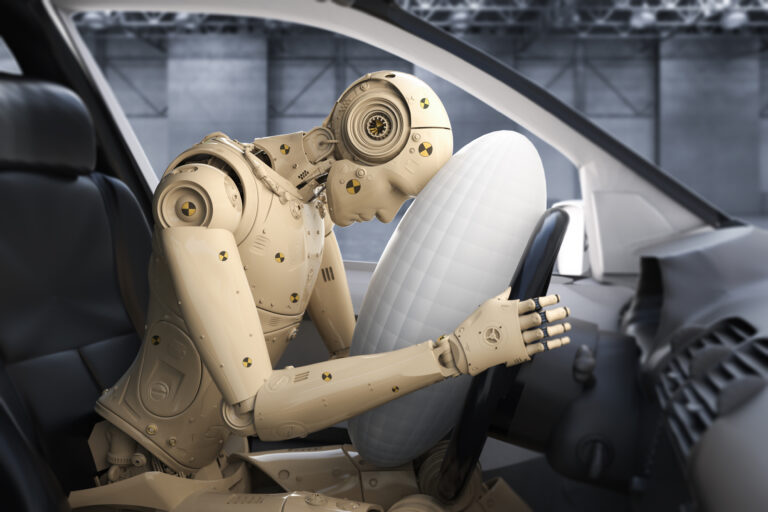
Modern vehicle safety didn’t happen by accident. It is the result of years of research, testing, and technological advancement. Two of the most important contributors to these improvements are crash-test dummies and biomechanics. Together, they help engineers understand how collisions affect the human body and guide the development of features that reduce injuries and save lives.
What Are Crash-Test Dummies?
Crash-test dummies, officially called Anthropomorphic Test Devices (ATDs), are specially designed tools that simulate the human body during a crash. These are not simple mannequins. They are highly advanced devices equipped with sensors that measure force, acceleration, and movement across different parts of the body.
Each dummy is built to represent specific demographics, including adult males, females, and children. This variation is essential because people of different sizes and body types experience collisions differently. By testing vehicles with a range of dummies, manufacturers can better understand how crashes affect real occupants and design safety systems accordingly.
The Role of Biomechanics in Vehicle Safety
Biomechanics is the scientific study of how the human body responds to physical forces. In vehicle safety, it focuses on how bones, muscles, and internal organs react during a collision. This field helps researchers determine how much force the body can withstand and what types of impacts are most likely to cause injury.
When engineers analyze crash-test data, biomechanics provides the context needed to interpret it. For example, if a dummy records a certain level of force to the chest, biomechanical research helps determine whether that force would result in minor bruising or more serious injuries like fractured ribs or internal damage.
How These Fields Work Together
Crash-test dummies and biomechanics are most effective when used together. The dummies collect precise data during simulated crashes, while biomechanics translates that data into real-world implications for human safety.
This combination allows engineers to make informed decisions about vehicle design. Instead of guessing what might work, they rely on measurable data and scientific analysis to improve safety features and reduce injury risks.
Improvements in Seat Belts and Airbags
One of the clearest examples of this collaboration is the evolution of seat belts and airbags. Early seat belts were basic restraints, but modern versions are designed to distribute force across stronger parts of the body, such as the chest and pelvis. This reduces the likelihood of severe injury during a collision.
Airbags have also improved significantly. Early designs were sometimes deployed with excessive force, causing unintended injuries. Today’s airbags are carefully calibrated using biomechanical data to deploy in a way that protects occupants while minimizing harm. These advancements demonstrate how testing and research directly translate into safer vehicles.
The Importance of Crumple Zones
Crumple zones are another major safety innovation influenced by crash testing and biomechanics. These areas of a vehicle are engineered to absorb and dissipate energy during a crash. By controlling how the car deforms, crumple zones reduce the force transferred to occupants inside the vehicle.
Crash-test dummies help measure how effectively these zones perform, while biomechanics ensures that the forces experienced by passengers remain within survivable limits. This combination significantly lowers the risk of serious injury in many types of collisions.
Advancements in Side-Impact Protection
Side-impact crashes can be especially dangerous because there is less distance between the occupant and the point of impact. Through extensive testing and biomechanical analysis, manufacturers have developed stronger door frames, side airbags, and improved interior padding.
These enhancements help reduce the severity of injuries in side collisions, which were once among the most dangerous types of accidents. As a result, vehicles today offer far better protection than those built in the past.
Contact an Anchorage Car Accident Lawyer at Farnsworth & Vance Personal Injury Lawyers for a Free Consultation
Even with major advancements in vehicle safety driven by crash-test dummies and biomechanics, serious car accidents still occur every day, often leaving victims with painful injuries, mounting medical bills, and long-term challenges.
If you or a loved one has been injured in a collision, it’s important to understand your legal options. Contact an Anchorage car accident attorney at Farnsworth & Vance Personal Injury Lawyers for a free consultation to discuss your case and learn how you can pursue the compensation you deserve.
Farnsworth & Vance Personal Injury Lawyers – Anchorage
2525 Gambell St #410,
Anchorage, AK 99503
(907) 290-8980
Farnsworth & Vance Personal Injury Lawyers – Eagle River
13135 Old Glenn Hwy, Suite 101
Eagle River, AK 99577
(907) 802-4097