

Why Back Pain After a Wreck May Show Up Late
Key Takeaways: A herniated disc from a car accident often doesn’t hurt right away, because adrenaline, shock and slowly building swelling can hide symptoms for hours or days. Seven warning signs to watch for are back or neck pain, pain spreading into the arms, sciatica down the leg, numbness, tingling, muscle weakness and pain that gets worse with certain movements. Getting medical care quickly and keeping careful records may help tie the injury to the crash, especially when insurers blame age-related wear or gaps in treatment. Alaska follows pure comparative fault, so you may still be able to recover damages even if you were partly at fault, though your award would generally be reduced by your share. Most personal injury claims in Alaska must be filed within two years, and the clock usually starts on the crash date, not when symptoms begin. Compensation may cover medical bills, lost wages and noneconomic damages, which are generally subject to Alaska’s caps.
A herniated disc from a car accident does not always cause pain right away. Adrenaline and shock can hide pain in the hours after a crash, and swelling around an injured disc may build slowly. Many people feel fine at the scene and then wake up two or three days later with sharp back pain, a burning leg, or numb fingers. These delayed injuries are common and can affect your health and your legal rights in Alaska.
If you developed back or neck symptoms in the days after a crash, Farnsworth & Vance can help you understand your options. Call 907-290-8980 or contact us now to talk about your situation.
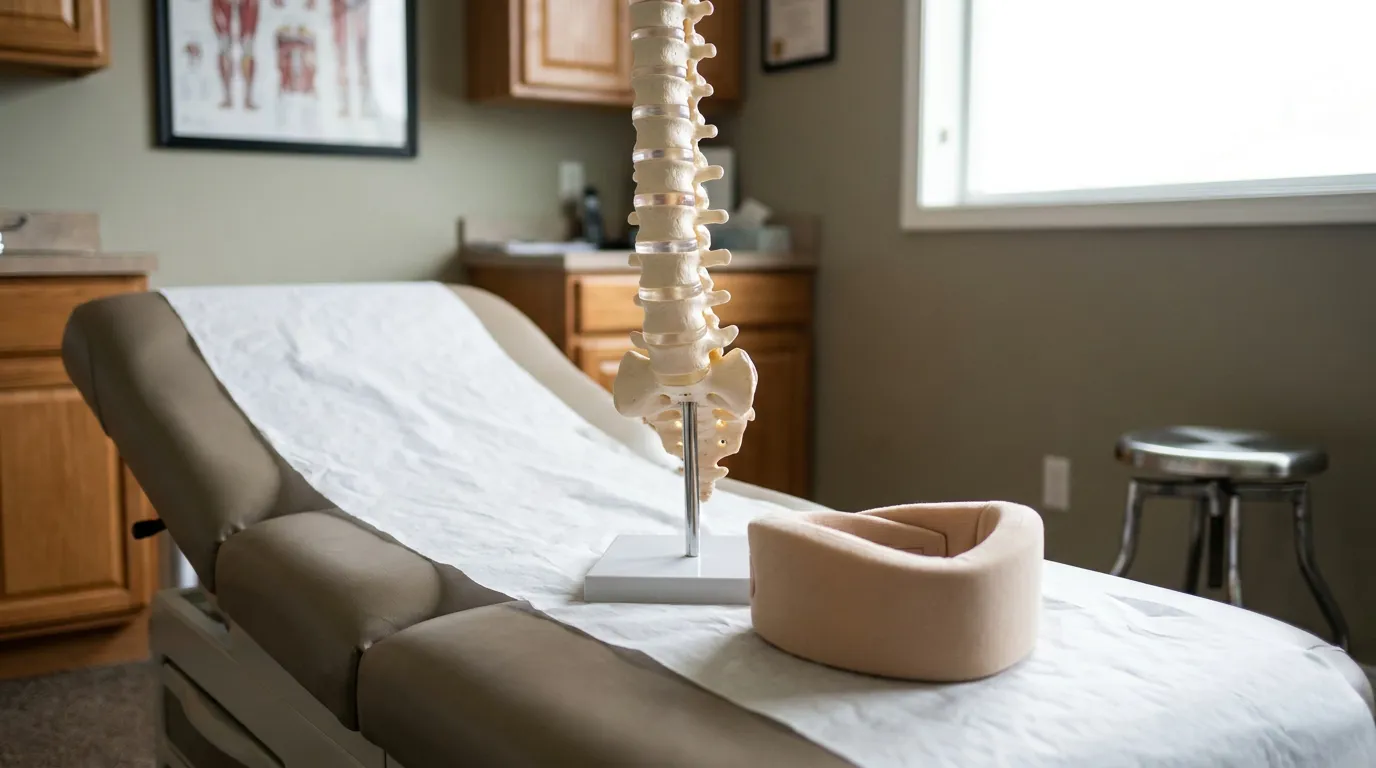
How a Crash Can Damage a Spinal Disc
Spinal discs are rubbery cushions that sit between the vertebrae. Each has a tough outer layer and a softer inner core. A sudden impact can push that inner material outward, so the disc bulges or ruptures. According to the Mayo Clinic, bulging disk causes include injury as well as wear over time. This matters because insurers sometimes blame back pain on age-related wear rather than the crash.
The delay often comes from pressure on a nerve. A displaced disc may press on nearby nerves as swelling increases, causing pain, numbness, or weakness that was not obvious at first. That gap between the crash and the first symptoms is one reason careful medical records matter so much.
7 Warning Signs of a Delayed Disc Injury
These symptoms may appear hours or days after a crash. Any one of them is a good reason to see a doctor, even if you were checked at the scene.
1. Localized Back or Neck Pain
Lasting, aching pain in the lower back or neck is often the first sign. It may feel like a pulled muscle and then get worse instead of better. Pain lasting longer than a few days should be checked.
2. Pain Radiating Into the Arms
A herniated disc in the neck can send pain down the shoulder and into the arm. Some describe it as electric or burning. It may worsen when you turn your head or reach overhead.
3. Sciatica Down the Leg
Sciatica after a crash often points to a lower-back disc pressing on the sciatic nerve. The pain usually travels from the buttock down the back of one leg. Sitting may make it much worse.
4. Numbness
Losing feeling in part of an arm, hand, leg, or foot can signal nerve damage. Numbness may come and go at first. Write down when it happens and which areas are affected, because those details may help doctors find the injured disc.
5. Tingling or "Pins and Needles"
Tingling often comes with numbness or shows up before it. Many people ignore it because it seems minor, but it may show that a disc is irritating a nerve root.
6. Muscle Weakness
Weakness in the affected limb can make it hard to grip objects, lift your foot, or climb stairs. You may stumble or drop things. Weakness usually calls for prompt imaging and follow-up care.
7. Pain That Worsens With Certain Movements
Pain that flares when you bend, cough, sneeze, or sit for long periods is typical of disc injuries. These movements increase pressure on the spine. If you notice a pattern, tell your doctor so it goes into your records.
💡 Pro Tip: Seek emergency care right away if you lose bladder or bowel control or feel numbness in the groin area. These symptoms can signal severe pressure on the nerves.
Proving Your Herniated Disc From Car Accident Was Caused by the Crash
Whether the crash caused the injury is often the main dispute in delayed injury claims. An insurer may argue that your disc problem existed before the crash or that something else caused it. Strong records can help connect your injury to the crash.
Steps that may help protect your claim include:
- Seeing a doctor as soon as symptoms appear and describing the crash in detail
- Following treatment plans and going to every appointment
- Keeping a daily symptom journal with dates and pain levels
- Saving photos of vehicle damage, the police report, and witness information
- Keeping records of missed work and out-of-pocket costs
Alaska law also requires drivers to report certain crashes. Under Alaska Stat. § 28.35.080, a driver involved in an accident that causes injury or death, or property damage above a set dollar amount, must immediately notify law enforcement. The state may also require a separate written report. A report made at the scene can become useful evidence later, even if no one seemed hurt at the time.
Gaps in Treatment and Comparative Fault
Insurers sometimes point to a gap in treatment and argue the injured person made things worse. Alaska follows pure comparative fault under Alaska Stat. § 09.17.060. If you are found partly at fault, your damages may be reduced by your share of fault, but your claim is generally not barred. Separately, an unreasonable failure to get treatment may reduce what you can recover for harm you could have avoided. Getting care promptly may make these arguments harder to win.
Alaska Deadlines That Apply to Delayed Injuries
In most cases, you have two years to file a personal injury lawsuit in Alaska. Under Alaska’s statute of limitations, Alaska Stat. § 09.10.070(a)(2), the deadline generally runs from the date the claim accrues. Claims for vehicle damage generally have the same two-year deadline under Alaska Stat. § 09.10.070(a)(3).
The clock usually keeps running even while your symptoms are still developing. Alaska courts recognize a discovery rule in limited cases, but they read it narrowly and it does not apply automatically. You can learn more about Alaska’s discovery rule and when it may apply. Insurance policy notice rules and claims against government entities can have separate, sometimes shorter, deadlines, so it is usually safest to act early.
Why Waiting Can Hurt Your Case
Evidence fades quickly after a crash. Vehicles get repaired, camera footage gets erased, and witnesses forget details. Acting within weeks rather than months usually leaves more evidence to work with.
What Compensation May Be Available
A disc injury claim may include both economic and noneconomic damages. Economic damages generally cover medical bills, lost wages, and future care. Under Alaska Stat. § 09.17.010(a), noneconomic damages may cover pain, suffering, inconvenience, physical impairment, disfigurement, loss of enjoyment of life, loss of consortium, and other nonfinancial harm.
Alaska limits noneconomic damages in most personal injury cases. The table below shows the caps under Alaska Stat. § 09.17.010(b)-(c). This statute does not cap economic damages.
| Type of Injury | Noneconomic Damages Cap (Whichever Is Greater) |
|---|---|
| Most personal injuries | $400,000 or life expectancy in years × $8,000 |
| Severe permanent physical impairment or severe disfigurement | $1,000,000 or life expectancy in years × $25,000 |
A serious spinal injury with lasting nerve damage could qualify for the higher cap if it is a severe permanent physical impairment, depending on the facts. Under Alaska Stat. § 09.17.010(d), multiple injuries from one incident, such as a herniated disc plus whiplash, generally count as a single injury when the cap is applied.
The Uninsured Driver Rule
Drivers who did not carry the liability insurance Alaska requires generally cannot recover noneconomic damages. Alaska Stat. § 09.65.320(a) sets out this bar. Under Alaska Stat. § 09.65.320(b), the bar generally does not apply if the at-fault driver was impaired, acted intentionally, recklessly, or with gross negligence, fled the scene, or was committing or fleeing from a felony. This bar does not affect economic damages.
Frequently Asked Questions
1. How long after a crash can herniated disc symptoms appear?
Symptoms may show up within hours, days, or sometimes longer. Swelling and pressure on nerves can build over time. A doctor should check any new back, neck, or limb symptoms after a crash.
2. Can I still file a claim if I did not go to the hospital right away?
In many cases, yes. Delayed treatment does not automatically end a claim, but the insurer may question whether the crash caused your injury. Seeing a doctor as soon as symptoms appear can help strengthen your records.
3. What if I had back problems before the accident?
A crash that worsens an existing condition may still support a claim. Generally, you may recover for the harm the crash added, but not for the earlier condition itself. Medical records from before and after the crash often help show the difference.
4. Does the two-year deadline start when my symptoms begin?
Generally, no. The deadline runs from when the claim accrues, which is usually the crash date. Alaska’s discovery rule may apply only in limited cases. Counting from the date of the accident is usually the safest approach.
5. Can I recover if I was partly at fault?
Alaska’s pure comparative fault rule generally allows recovery even if you share some blame. Your award would generally be reduced by your percentage of fault. The outcome depends on the facts of the crash.
Protecting Your Health and Your Claim
A herniated disc from a car accident can disrupt your work, sleep, and daily life, often starting days after the crash. Watch for back pain, radiating pain, sciatica, numbness, tingling, weakness, and pain that gets worse with movement. Get medical care promptly, keep your records organized, and remember that Alaska’s two-year deadline is usually already running. Every case depends on its own facts, so getting advice early can help you make informed decisions.
If you are dealing with delayed symptoms after a crash, a herniated disc from car accident lawyer at Farnsworth & Vance can review your situation and explain your options. Call 907-290-8980 or schedule a consultation today.
Disclaimer: This content is for informational purposes only and is not legal advice. Every case is unique, and results may vary. Consult an attorney about your specific circumstances.


