
Your Right to Hold a Negligent Property Owner Accountable in Alaska
Key Takeaways: Yes, injured visitors can sue an Anchorage business after a slip and fall when the business failed to keep its property reasonably safe. Alaska law imposes a duty of reasonable care on property owners, and a successful claim requires proving the business knew or should have known about a dangerous condition, failed to fix or warn about it, and caused a real injury. Under Alaska’s pure comparative fault system, you can recover even if you share some blame, though your damages are reduced by your percentage of fault. Injured visitors may recover uncapped economic damages plus noneconomic damages capped at the greater of $400,000 or the injured person’s life expectancy in years multiplied by $8,000, with that cap rising to the greater of $1,000,000 or life expectancy multiplied by $25,000 for severe permanent physical impairment or severe disfigurement. Claims generally must be filed within two years, and signed waivers only bar recovery when they meet six requirements set by Alaska case law. Preserving evidence quickly and identifying every responsible party are critical to protecting your claim.
Yes, injured visitors can sue an Anchorage business after a slip and fall in Alaska when the business failed to keep its property reasonably safe. Alaska law places a clear duty on property owners, and visitors who suffer serious injuries on commercial property may pursue compensation. Whether your claim succeeds depends on proving the business breached its duty, that the breach caused your injury, and that you filed within the legal deadline.
If you or a family member suffered a lasting injury on a business’s property, the team at Farnsworth & Vance can review the facts of your situation. Call 907-290-8980 or reach out through our Anchorage injury case consultation page to discuss your legal options directly with a local attorney.
The Duty Anchorage Businesses Owe to Visitors
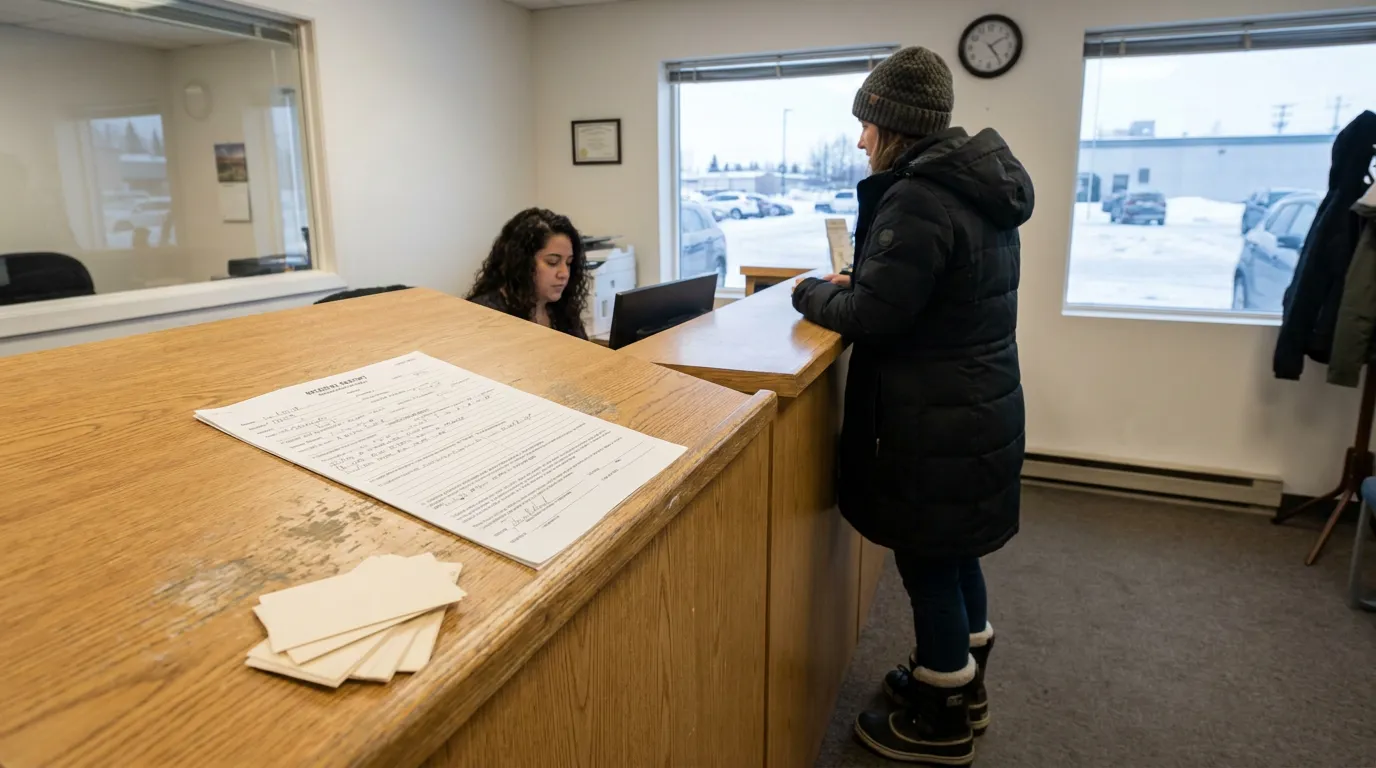
Every business that invites the public onto its property carries a legal duty of reasonable care. Under Alaska Civil Pattern Jury Instruction 6.01, a landowner is negligent if the owner fails to exercise reasonable care to guard against unreasonable risks created by a dangerous condition on the property. This is the core rule behind most premises liability Alaska claims involving stores, restaurants, and commercial spaces.
The standard is reasonable care, not perfection. The law does not require exceptional caution or skill, only reasonable care. A court measures a business by what a reasonably careful owner would have done in similar circumstances, which you can review in the state’s official landowner liability jury instruction. A business is not automatically liable simply because someone fell on its floor.
Alaska courts weigh several practical factors when deciding whether a property was kept reasonably safe. The Comment to Instruction 6.01, citing Webb v. City & Borough of Sitka, 561 P.2d 731 (Alaska 1977), directs courts to consider the likelihood of injury, the seriousness of the injury, and the burden of avoiding the risk. This general duty of due care is established through later decisions, including Estate of Mickelsen v. North-Wend Foods, 274 P.3d 1193 (Alaska 2012), and Burnett v. Covell, 191 P.3d 985 (Alaska 2008).
Improved Property Versus Unimproved Land
This reasonable-care standard applies to improved property, which covers most Anchorage business premises. The Use Note to Instruction 6.01 distinguishes improved property from unimproved land governed by AS 09.65.200, where separate liability limitations may apply. Since stores, offices, and parking structures are typically improved property, the standard duty of care generally governs a store slip and fall claim.
What You Must Prove in Slip and Fall Accident Claims in Alaska
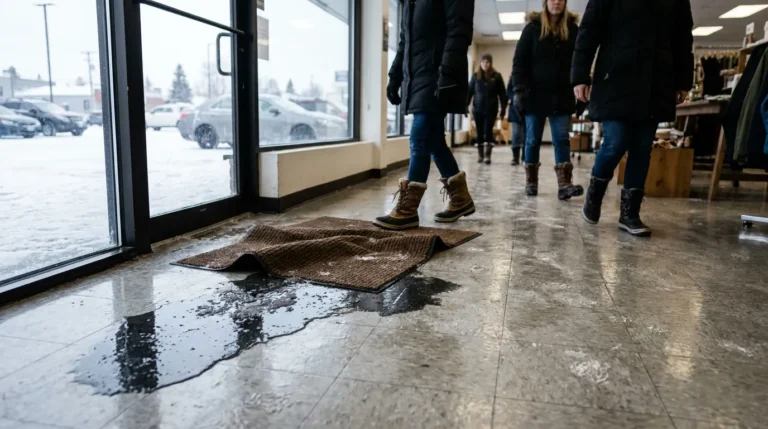
A successful case requires connecting the business’s conduct to your injury through the elements of negligence. Proving property owner negligence Alaska generally means showing the business knew or should have known about a dangerous condition, failed to correct it or warn about it, and that this failure caused a real injury. Our guide on proving negligence in a winter slip-and-fall case explains how ice, snow, and tracked-in moisture factor into liability.
Evidence preservation often decides these cases. Because dangerous conditions like spills or ice are temporary, gathering proof quickly can be the difference between a provable claim and a disputed one. Consider preserving:
- Photographs of the hazard, the surrounding area, and any warning signs present or absent
- Names and contact information of witnesses who saw the fall or the condition
- The clothing and footwear you wore, kept unwashed and unaltered
- Incident reports, and a written request that the business preserve surveillance video
💡 Pro Tip: Surveillance footage is frequently overwritten within days or weeks. A prompt written preservation request to the business can prevent the loss of the single most useful piece of evidence in a slip and fall injury Anchorage claim.
How Alaska’s Comparative Fault Rule Affects Your Recovery
Alaska follows a pure comparative fault system, so being partly at fault does not end your claim. Under AS 09.17.060, contributory fault chargeable to the claimant diminishes proportionately the compensatory damages awarded but does not bar recovery. An injured visitor can still sue and recover even if a jury assigns them a share of the blame.
A jury allocates a percentage of fault to each party involved. Under AS 09.17.080, the court instructs the jury to determine the percentage of total fault allocated to each claimant, defendant, and third-party defendant, and awards are reduced accordingly. Fault can even be measured against non-parties. The statutory definition in AS 09.17.900 covers negligent acts or omissions as well as a claimant’s unreasonable assumption of risk or failure to avoid injury.
Alaska also uses several liability rather than joint liability. A defendant business is generally liable only for its own percentage of fault as determined by the trier of fact. When more than one party shares responsibility for a fall, identifying every responsible party early is important.
Damages Available After a Serious Fall
Alaska law allows recovery for economic and noneconomic losses, subject to statutory caps. Economic damages such as medical bills, long-term care costs, and lost wages are generally not capped. Noneconomic damages follow limits set by statute, and you can read the underlying rules in the state’s Title 9 civil statutes.
| Type of Damages | General Rule Under Alaska Law |
|---|---|
| Economic (medical, wages, care) | Compensable, generally not capped |
| Noneconomic (pain, suffering, loss of enjoyment) | Capped at the greater of $400,000 or life expectancy in years × $8,000 (AS 09.17.010(b)) |
| Noneconomic for severe injury (paralysis, permanent cognitive impairment) | Capped at the greater of $1,000,000 or life expectancy in years × $25,000 (AS 09.17.010(c)) |
| Punitive damages | Clear and convincing standard; capped per AS 09.17.020 |
Punitive damages are available only in narrow situations. Under AS 09.17.020, they require clear and convincing evidence of outrageous conduct and generally may not exceed three times compensatory damages or $500,000, whichever is greater, with half deposited into the state general fund. A higher cap can apply when the conduct was motivated by financial gain.
The Two-Year Deadline and Waivers That May Bar a Claim
Alaska generally requires a personal injury lawsuit to be filed within two years of the injury. Under AS 09.10.070, a person may not bring an action for personal injury, death, or property damage unless the action is brought within two years of the accrual of the action. Courts interpret exceptions narrowly. Tolling or delayed discovery may apply in limited circumstances, but you should not assume either applies automatically.
Signed liability waivers can also affect whether you can sue. Alaska courts recognize enforceable pre-injury waivers, and cases including Ledgends, Inc. v. Kerr, 91 P.3d 960 (Alaska 2004), Moore v. Hartley Motors, 36 P.3d 628 (Alaska 2001), and Kissick v. Schmierer, 816 P.2d 188 (Alaska 1991), set out six essential characteristics of an effective waiver. A waiver that fails one or more of those requirements generally does not bar a claim, and Alaska courts will not enforce a waiver that purports to release liability for reckless or intentional conduct.
Why Local Representation Matters
Choosing a local firm over an out-of-state one gives you an attorney who knows Alaska courts and can meet you in person. Two of the attorneys at Farnsworth & Vance are former insurance defense litigators who now use that knowledge of insurer strategy on behalf of injured clients. If you want direct guidance from an Anchorage slip and fall lawyer, working with a firm based in Alaska keeps your case grounded in local practice.
Frequently Asked Questions
1. Can I still sue if I was partly to blame for my fall?
Yes. Under AS 09.17.060, your share of fault reduces your damages proportionally but does not bar recovery. A jury assigns each party a percentage of fault.
2. How long do I have to file slip and fall accident claims in Alaska?
Generally two years from the date of injury under AS 09.10.070. Certain exceptions may extend that period in limited circumstances, but courts apply them narrowly.
3. Is a business automatically liable if I fell on its property?
No. The business is liable only if it failed to exercise reasonable care under Instruction 6.01. You must show a dangerous condition and that the business knew or should have known about it.
4. Does a waiver I signed prevent me from suing?
Not necessarily. Alaska enforces waivers only when they meet six requirements set out in binding case law, and never for reckless or intentional conduct.
5. What damages can I recover for a catastrophic injury?
Economic losses like medical care and lost wages, plus capped noneconomic damages. Under AS 09.17.010(c), the noneconomic cap rises to the greater of $1,000,000 or life expectancy in years multiplied by $25,000 for severe permanent physical impairment or severe disfigurement.
Protecting Your Claim After a Serious Fall
Injured visitors in Alaska have a real path to hold a negligent business accountable, but outcomes depend on the specific facts. The law sets a reasonable-care duty on property owners, allows recovery even when you share some fault, and enforces a two-year filing deadline with only narrow exceptions. Preserving evidence, identifying every responsible party, and understanding the damages caps all shape what a claim can achieve.
To discuss a permanent or catastrophic slip-and-fall injury with a local attorney, contact Farnsworth & Vance today. Call 907-290-8980 or use our Alaska injury contact form to arrange a direct conversation about your legal options.