
Building a Strong Slip and Fall Case on Alaska Property
Key Takeaways: Proving a slip and fall injury claim in Alaska requires evidence connecting a hazardous condition, the property owner’s failure to address it, and your injuries. Strong cases rest on physical evidence like photos and video, medical records establishing injury and causation, and witness accounts confirming the owner had notice. Alaska premises liability law under Title 9 requires proving negligence by a preponderance of the evidence. Alaska follows pure comparative negligence under AS 09.17.060, so your fault reduces your recovery proportionally but never bars it entirely. Personal injury claims must be filed within two years of the accident under AS 09.10.070. Because conditions change and footage is quickly overwritten, gathering evidence early is critical to success.
Proving a fall injury comes down to evidence connecting a hazardous condition, a property owner’s failure to address it, and the harm you suffered. In Alaska, that means documenting the dangerous condition, your injuries, and the owner’s knowledge of the risk. Slip and fall claims succeed or fail on the strength of that record, and the strongest records are built early. The law places the burden on the injured person to show the property owner’s negligence caused the fall and damages.
If you were seriously hurt on someone else’s property, the team at Farnsworth & Vance can review what happened and explain your options. Call our office at 907-290-8980 or reach us through our Anchorage injury contact page to discuss preserving the evidence your case depends on.
The Evidence That Anchors Slip and Fall Accident Claims in Alaska
Physical proof, medical documentation, and witness accounts form the backbone of any premises liability case. Each category answers a different question: what the hazard was, how badly it hurt you, and whether the owner knew about it. Because Alaska juries must determine both total damages and the percentage of fault attributable to each party under AS 09.17.080, your evidence must support both. Missing one category can weaken an otherwise valid claim.
| Evidence Category | What It Helps Prove |
|---|---|
| Photos and video of the scene | Existence and nature of the hazard |
| Medical records and imaging | Injury severity and causation |
| Witness statements | Notice and conditions at the time |
| Incident/store reports | Owner’s awareness of the danger |
| Maintenance and inspection logs | Whether the owner acted reasonably |
Physical and Scene Evidence
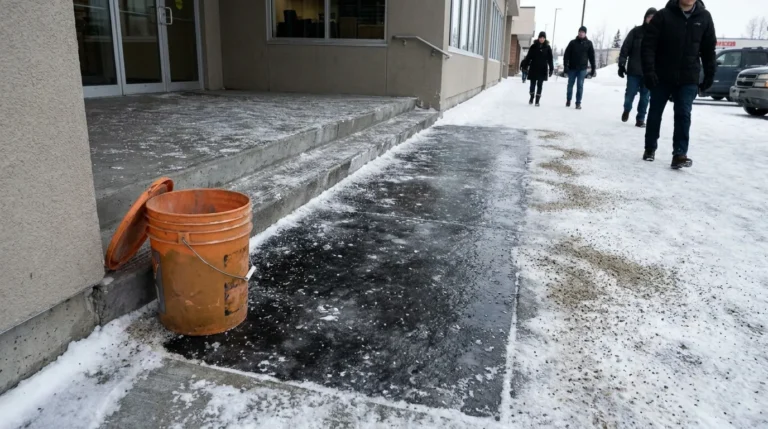
Photographs and video taken at the scene are often the most persuasive evidence in a fall case. Capture the spill, ice patch, torn carpet, broken stair, or poor lighting from several angles, and include something for scale. Conditions on Alaska property change quickly, especially when weather, foot traffic, or cleanup erases the hazard within minutes. If you could not photograph the scene yourself, note the date, time, and exact location so counsel can request surveillance footage before it is overwritten.
Medical Records and Injury Documentation
Medical records tie your injuries to the fall and establish the value of your claim. Fall injuries frequently require care that generates detailed records, and those records become key evidence. Prompt treatment matters because gaps in care give insurers room to argue your injuries came from something else.
Witnesses and Surveillance
Independent witnesses can confirm the hazard existed and that the owner had time to fix it. Get names and contact information for anyone who saw the fall or the condition beforehand. Store employees, other customers, and nearby residents may recall how long a spill sat or whether a walkway went unsalted. Surveillance video, incident reports, and internal maintenance logs often exist but must be requested quickly, since many businesses retain footage for only a short period.
How Alaska Premises Liability Law Frames Your Proof
Alaska premises liability turns on whether the property owner acted with reasonable care toward people lawfully on the property. Slip and fall injury cases fall under Title 9, the Code of Civil Procedure, which governs civil actions in the state. Under AS 09.17.900, "fault" is defined broadly to include acts or omissions that are in any measure negligent or that subject a person to strict liability.
The standard of proof in a civil injury case is a preponderance of the evidence. That means you must show your claim is more likely true than not true. Whether a hazard was open and obvious, how long it existed, and what a reasonable owner would have done are fact-dependent questions, so outcomes vary with the circumstances. For a closer look at seasonal hazards, our guide on how to prove negligence in a winter slip-and-fall walks through ice and snow cases in detail.
Comparative Negligence and the Two-Year Filing Deadline
Alaska follows pure comparative negligence, so your own conduct can reduce your recovery in proportion to your fault but does not bar it, even if you were mostly to blame. AS 09.17.060 adopts this rule, and a defendant asserting comparative fault must prove it is more likely true than not that the plaintiff was negligent and that the negligence was a legal cause of the injury. In practice, an insurer may argue you were not watching where you walked or were wearing improper footwear. Solid scene and witness evidence helps counter those arguments and protect the share of fault assigned to the property owner.
Personal injury claims generally must be filed within two years of the accident. AS 09.10.070 provides that an action for personal injury must be commenced within two years of the accrual of the cause of action. Courts interpret exceptions narrowly, and tolling or delayed discovery applies only in limited circumstances. This civil deadline is separate from any internal claim process an insurer may run, so relying on an adjuster’s timeline instead of the statute can be a costly mistake.
Alaska’s civil justice reforms also affect how these cases are litigated and compensated. The legislation described in House Bill 158 states a purpose of creating a more equitable distribution of the cost and risk of injury while ensuring adequate compensation for people injured through the fault of others. That law amended procedural and evidentiary rules, including expert-testimony standards under Alaska Rule of Evidence 702. Under AS 09.17.010, noneconomic damages such as pain, suffering, physical impairment, disfigurement, and loss of enjoyment of life are statutorily defined and subject to caps.
Common Challenges in Proving Property Owner Negligence
The hardest part of many claims is proving the owner knew or should have known about the hazard. Notice is frequently disputed, and defendants often argue the condition appeared too recently to correct. The following obstacles come up repeatedly:
- Lost or overwritten surveillance footage that would have shown how long a hazard existed
- Cleaned-up or repaired conditions that no longer reflect what caused the fall
- Delayed medical treatment that lets insurers dispute causation
- Comparative fault arguments that shift blame onto the injured person
- Missing maintenance records that make the owner’s inspection practices hard to evaluate
Falls are a serious source of injury, which is why documenting severity matters. When a fall causes a fracture, head injury, or permanent disability requiring surgery or long-term care, the stakes for getting the evidence right are high.
💡 Pro Tip: Request that a business preserve its surveillance video in writing as soon as possible. A short, dated preservation letter can prevent footage from being deleted on a routine recording cycle.
Two of the attorneys at Farnsworth & Vance previously worked as insurance defense litigators, and they now use that background against insurers. Knowing how adjusters build a defense file helps identify the records and testimony that carry weight. Choosing a local Alaska firm over an out-of-state operation also means working with people who understand Alaska’s weather, courts, and statutes, and who can meet with you in person rather than treating your case as an online transaction. If you want to understand how a claim is investigated, our page for an Anchorage slip and fall attorney explains the process further.
Frequently Asked Questions
1. How soon should I gather evidence after a fall?
As soon as safely possible. Scene conditions, surveillance footage, and witness memories change fast. Photographing the hazard, getting witness contact information, and seeking prompt medical care all help preserve proof.
2. Can I still recover if I was partly at fault?
Yes. Under AS 09.17.060, Alaska uses pure comparative negligence, so your recovery is reduced by your share of fault rather than barred outright, even if your share exceeds the property owner’s. The reduction depends on how a jury apportions fault under AS 09.17.080.
3. What is the deadline to file a slip and fall lawsuit in Alaska?
Generally two years from the date of the accident. AS 09.10.070 sets that limit for personal injury actions. Exceptions are read narrowly, so you should not assume a later date applies without confirming your situation.
4. What damages can I recover in a fall injury claim?
Recoverable damages can include economic losses and defined noneconomic losses. Under AS 09.17.010, noneconomic damages are limited to categories such as pain, suffering, physical impairment, disfigurement, and loss of enjoyment of life, and are subject to statutory caps. The amount depends on the evidence supporting each type of harm.
5. Do I need medical records if my injury seemed minor at first?
Yes, documentation still matters. Some fall injuries, including head and spine injuries, worsen or reveal themselves over time. Consistent medical records connect your condition to the fall and reduce an insurer’s ability to dispute causation.
Protect Your Claim With a Local Alaska Legal Team
Evidence wins fall cases, and the record you build in the first days often decides what your claim looks like years later. Photographs, medical records, witness accounts, and internal owner documents each play a role, and Alaska law under Title 9 sets the standards you must meet to prove property owner negligence. Because comparative fault and the two-year deadline both affect your outcome, acting early protects your position.
To discuss preserving evidence and evaluating your slip and fall lawsuit in Alaska, contact Farnsworth & Vance today. Call 907-290-8980 or use our online case review request to speak directly with an Alaska attorney about your next steps.