
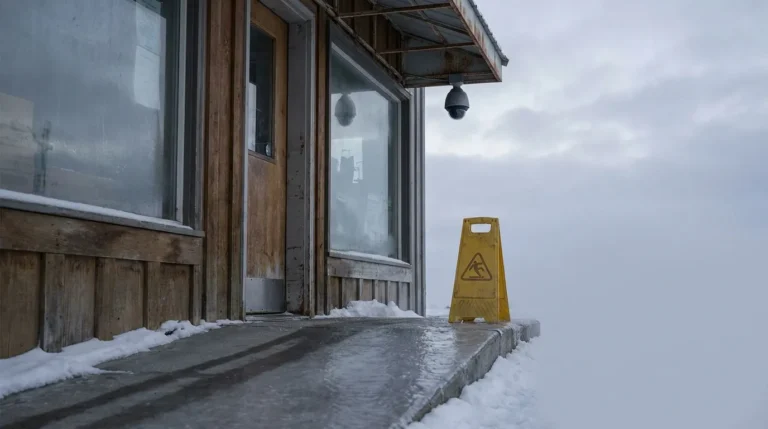
Why Preserving Store Video Can Decide Your Alaska Fall Case
Key Takeaways: A spoliation letter is a formal written demand, typically sent by an injury attorney soon after a fall, directing a property owner and its insurer to preserve evidence such as surveillance video, incident reports, inspection and sweep logs, employee statements, and the substance or object involved. It matters because many commercial video systems overwrite footage within days, and once that recording is gone it usually cannot be recreated. The letter helps document the date the owner was on notice that litigation was reasonably foreseeable, which is one factor courts consider in deciding when a preservation duty attached. Courts weigh culpability when choosing a remedy, with routine pre-notice overwriting often drawing no sanction and the harshest sanctions generally requiring a finding of intent to deprive. Because Alaska’s two-year limitations period under AS 09.10.070 is generally far longer than the life of most recordings, waiting to investigate can mean losing the best proof. If footage is already gone, photographs, witness accounts, medical records, and prior-incident evidence may still support a claim.
A spoliation letter is a formal written demand, usually sent by an injury attorney shortly after a fall, asking a property owner and its insurer to preserve all evidence connected to the incident. In a slip and fall claim, that typically includes security video, incident reports, inspection and maintenance logs, cleaning schedules, employee statements, and the object or substance that caused the fall. It matters because many businesses overwrite digital video on a short cycle, sometimes within days, and once that footage disappears it generally cannot be recreated. Sending the demand early puts the owner on notice that litigation is anticipated, which is one circumstance courts look to in determining when a duty to preserve arose.
If you were seriously hurt on someone else’s property in Anchorage or elsewhere in the state, the team at Farnsworth & Vance can move quickly to protect the proof your claim depends on. Call 907-290-8980 or reach out to our team today to discuss what evidence may still be recoverable in your situation.
What a Spoliation Letter Actually Does
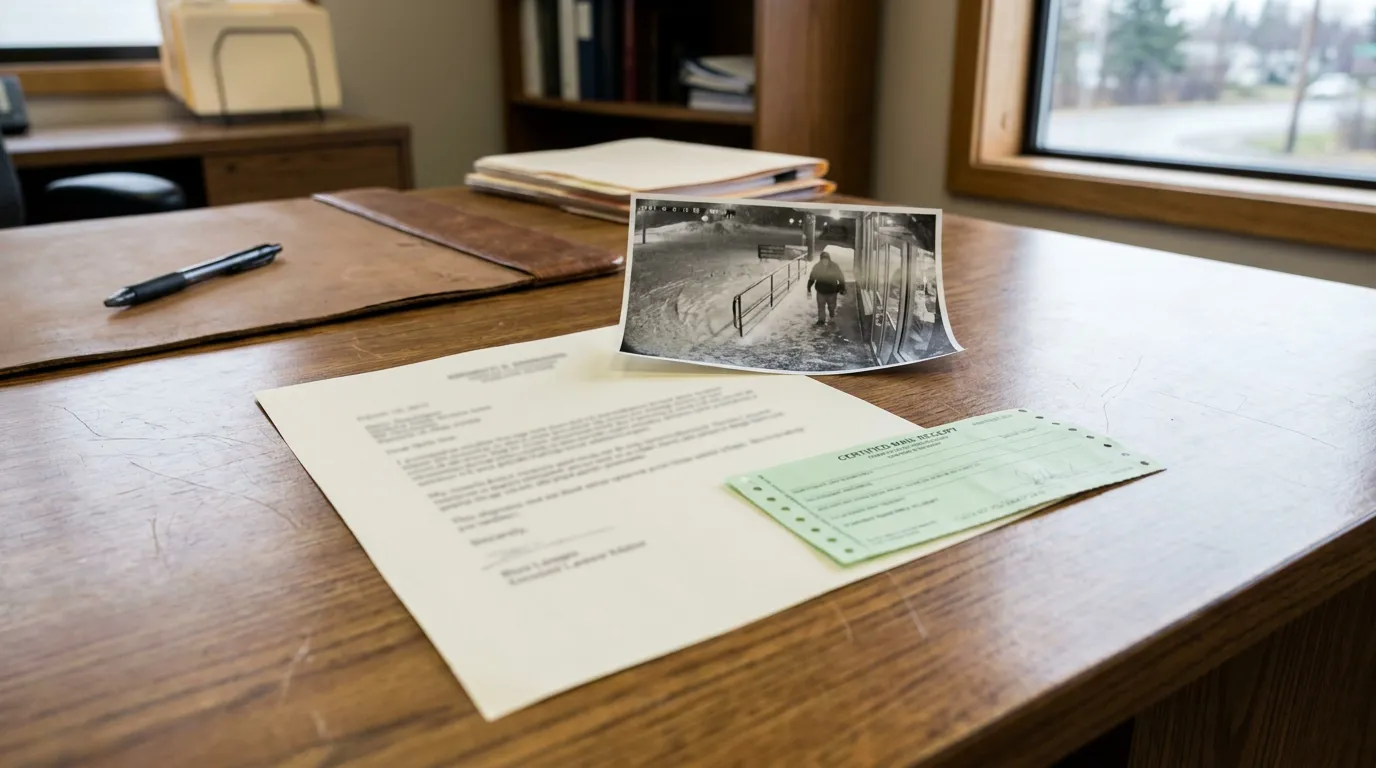
A spoliation letter can convert a general expectation of fairness into a documented, dated request. Before the letter arrives, a store manager might reasonably say no one told them a claim was coming and the system simply cycled over itself. After it arrives, that explanation becomes harder to sustain, because the recipient has written notice identifying the date, time, location, and categories of material to be retained. Courts may consider that notice when deciding whether a party took reasonable preservation steps. A letter alone does not create liability, and a duty to preserve can in some circumstances exist without one.
The letter may also narrow arguments later in the case. A well-drafted evidence preservation letter names specific items rather than asking generally for "everything," making it harder for a defendant to claim confusion about scope. It typically identifies camera angles, the retention period of the system, employees on shift, and any electronic maintenance or work-order records. Precision matters, because the remedies discussed below generally depend on showing that identifiable, relevant material was lost and that the loss caused prejudice.
The Legal Foundation Behind Evidence Preservation Duties
Preservation duties generally flow from procedural rules and from the doctrine of spoliation developed in case law. Alaska’s civil actions are governed by Alaska Statutes Title 9, while discovery practice in state court is governed principally by the Alaska Rules of Civil Procedure. Those rules are modeled significantly on the federal rules, so federal preservation principles often provide useful context, even though they do not control a state case and Alaska has not adopted a state analogue identical to federal Rule 37(e).
On the federal side, Rule 37(e) addresses lost electronically stored information. If information that should have been preserved is lost because a party failed to take reasonable steps to preserve it, and cannot be restored through additional discovery, a court may, upon finding prejudice, order measures no greater than necessary to cure it. The harshest sanctions under Rule 37(e)(2), such as an adverse inference instruction, dismissal, or default, are available "only upon finding that the party acted with the intent to deprive another party of the information’s use in the litigation." That distinction between careless loss and deliberate destruction shapes nearly every spoliation dispute.
Negligent Loss Versus Intentional Destruction
The remedy a court selects generally tracks the culpability of the party that lost the evidence. Academic treatment of the spoliation doctrine, including work published in the Cornell legal studies research papers, discusses responses ranging from permitting argument about missing material to instructing juries they may draw an unfavorable inference. Alaska courts have also addressed spoliation through discovery sanctions and, in limited circumstances, have recognized narrow, fact-specific tort theories for intentional interference with a prospective civil action. Outcomes remain highly fact-dependent, and no injured person should assume a particular sanction will follow automatically.
| Conduct | Typical judicial focus | Possible response |
|---|---|---|
| Routine overwrite before notice | Whether litigation was reasonably anticipated | Often no sanction |
| Failure to act after a preservation demand | Reasonableness of steps taken | Curative measures |
| Deliberate deletion to defeat a claim | Intent to deprive | Severe sanctions, subject to proof |
Why Timing Drives Everything
Alaska’s two-year filing window is generally longer than the life of most surveillance recordings. Under AS 09.10.070, most personal injury actions carry a two-year statute of limitations, though different deadlines and notice requirements can apply to government defendants and to claims by minors or incapacitated persons. Waiting until near that deadline to investigate can mean the video, cleaning log, and employee memories are all long gone. Tolling and discovery-rule arguments may exist in limited circumstances, but should never be treated as automatic.
💡 Pro Tip: Write down the date and exact time of your fall, the nearest aisle or entrance, and any visible camera locations while details are fresh. That information can make a preservation demand dramatically more specific.
How a Spoliation Letter Surveillance Footage Request Is Built
A strong request identifies the recording system, the retention interval, and every camera that may have captured the area. Many commercial systems store only a limited window before automatic overwriting begins, so the letter should ask that the relevant segment be exported and preserved in its native format rather than as a short edited clip. Attorneys frequently request surrounding hours as well, since footage before the fall may show how long a hazard existed and whether employees walked past it.
The same letter usually extends beyond video. Inspection sheets, sweep logs, work orders, vendor contracts for floor care, mat protocols, and internal incident reports all may bear on notice of the hazard, often central to Alaska premises liability analysis. Electronic records deserve particular attention because they can be modified or purged silently. Understanding what evidence proves a slip and fall claim helps explain why this broader documentation can matter as much as the video itself.
Common Items Named in a Preservation Demand
- All video from every camera covering the location for a defined period before and after the fall
- Incident and accident reports, including witness and employee statements
- Inspection, sweep, and maintenance logs for the area
- Personnel schedules identifying who was working and who responded
- The physical substance, product, mat, or floor covering involved
- Communications with insurers, vendors, or corporate risk management about the event
Why Property Owners Take These Letters Seriously
Evidence destruction can carry consequences well beyond an unfavorable jury instruction. Federal law under 18 U.S.C. § 1519 provides that whoever knowingly alters, destroys, mutilates, conceals, covers up, falsifies, or makes a false entry in any record with intent to impede or obstruct a matter within federal jurisdiction may be fined, imprisoned up to 20 years, or both. Because it is limited to federal matters and bankruptcy proceedings, that statute generally has no application to an ordinary state premises case and should not be read as a threat in a civil claim. It does, however, illustrate how seriously the legal system treats the integrity of records.
In civil practice, the more immediate motivator is often credibility. A defendant who receives a clear property owner evidence duty notice and then loses the very footage requested may face uncomfortable questions in front of a jury. Insurers understand this dynamic, which is one reason a documented preservation demand can meaningfully change the tone of early negotiations.
What Happens If the Footage Is Already Gone
Losing video does not necessarily end a claim, though it may change the strategy. Counsel may pursue an Alaska spoliation claim argument within the existing case, seek discovery into the retention policy and who made deletion decisions, and rely on alternative proof such as photographs, witness accounts, medical records, and comparable prior incidents at the same location. Whether a court grants any particular remedy depends on evidence of the duty to preserve, notice, prejudice, and culpability, and prior-incident evidence is admissible only if the earlier incidents are substantially similar.
Alternative proof can often carry real weight. Slips, trips, and falls are a leading cause of preventable workplace injuries, and safety guidance from the National Safety Council on slips, trips and falls hazards identifies recurring causes such as spills, clutter, and inadequate lighting. This guidance does not itself set the legal standard of care, but evidence that a property failed to address a known hazard may support a negligence theory even without a recording.
💡 Pro Tip: Preserve the shoes and clothing you wore, unwashed, in a paper bag. Defense arguments about footwear are common, and the actual items are generally stronger than a description.
Steps to Take in the Days After a Fall
Practical action in the first week can often determine what Alaska injury evidence survives. Report the incident to a manager and request a copy of any written report. Photograph the hazard, the lighting, the footwear, the surrounding floor, and any warning signs or absence of them. Collect names and phone numbers from anyone who saw the fall or the condition beforehand.
Then seek guidance promptly so a preservation demand can be issued. An Anchorage slip and fall attorney can send a spoliation letter surveillance footage demand within days rather than weeks, often the difference between recovering video and receiving a letter explaining the system already recycled. Every case turns on its own facts, and early legal guidance can help identify which materials are realistically still available.
Frequently Asked Questions
1. How soon should a spoliation letter Alaska demand be sent?
As soon as reasonably possible, often within the first days after the fall. Many retail and commercial video systems overwrite older recordings on a short cycle. Delay is one of the most common reasons footage becomes unavailable.
2. Can I send a preservation letter myself?
Yes, an injured person may send written notice, and doing so is generally better than sending nothing. That said, letters drafted without knowledge of discovery practice often omit categories that later prove important. Scope and specificity generally affect how much weight a court gives the notice.
3. Does a spoliation letter force the property owner to give me the video?
No, a preservation demand asks for retention, not production. Access typically comes later through formal discovery once a lawsuit is filed, or sometimes through negotiation with the insurer. The letter’s purpose is to make sure the material still exists when that moment arrives.
4. What if the business claims it had no cameras?
Counsel can investigate through discovery, including questions about system installation, service records, and third-party monitoring contracts. Neighboring businesses, parking structures, and municipal cameras may also have captured relevant views, though obtaining footage from non-parties usually requires a subpoena or their cooperation. Whether any of that material exists depends entirely on the location.
5. Does spoliation guarantee that I win my case?
No. Courts may impose remedies, but the harshest sanctions generally require a finding of intent to deprive another party of the evidence. Negligent loss more often results in curative measures, and a plaintiff must still prove the underlying negligence claim. Every outcome depends on the specific facts and the court’s assessment.
Protecting the Proof Before It Disappears
A spoliation letter is one of the most time-sensitive tools in a slip and fall claim. It documents the moment the property owner learned litigation was anticipated, defines what is being asked to be retained, and creates a record courts may later consider when weighing whether reasonable preservation steps were taken. While Alaska’s two-year limitations period under AS 09.10.070 may feel generous, the practical window for capturing surveillance video is often measured in days. Strong slip and fall evidence preservation early may give an injured person options that later effort cannot restore.
If you or a loved one suffered a serious injury in a fall on commercial or private property, the attorneys at Farnsworth & Vance are ready to help you act before critical evidence is lost. Call 907-290-8980 or schedule a consultation now to discuss your circumstances.
Disclaimer: This content is for informational purposes only and is not legal advice. Every case is unique, and results may vary. Consult an attorney about your specific circumstances.


