
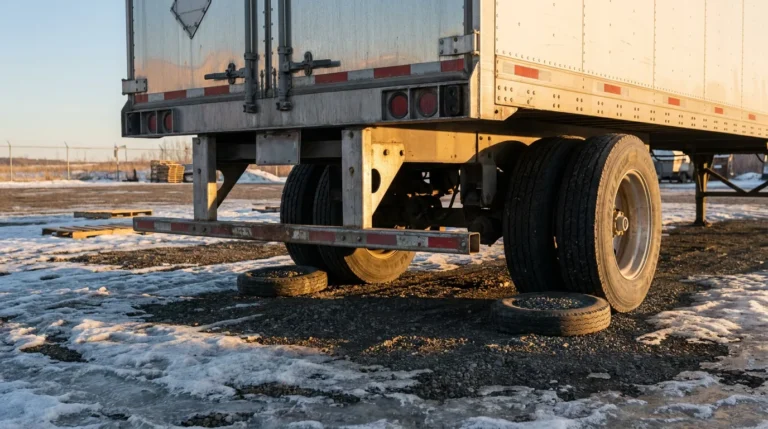
When a Trailer’s Rear Guard Fails: Building a Defect Case After an Alaska Underride Crash
Key Takeaways: Proving that a defective rear impact guard caused an Anchorage underride injury generally starts with preserving the trailer, the guard, and the striking vehicle before repairs or salvage destroy the evidence. Investigators then compare the failed guard against the federal standards that applied when it was built, including FMVSS No. 223 and FMVSS No. 224 and the amendments adopted in the July 2022 final rule, which carried a compliance date of July 15, 2024. Physical evidence such as guard height and width, weld and corrosion conditions, deformation patterns, certification labels, and maintenance records often carries significant weight, and a missing or illegible label may support an argument that compliance cannot be verified. Claims may proceed on multiple theories at once, potentially reaching the trailer or guard manufacturer for defect, the carrier for negligent inspection or maintenance, a repair facility for negligent repair, and the driver for negligent operation. Causation is often the hardest element, since defense engineers may argue the same injuries would have occurred with a compliant guard, which is why reconstruction modeling comparing the actual crash to a conforming-guard scenario can be critical. Alaska generally allows two years to file personal injury claims under AS 09.10.070 and wrongful death claims under AS 09.55.580, so prompt investigation is essential.
When a passenger vehicle strikes the back of a semitrailer and slides underneath it, the rear impact guard is often the only thing standing between the occupants and catastrophic injury. If that guard bends, snaps, or shears away, the crash may involve more than driver negligence. Proving a defective rear impact guard generally requires connecting federal equipment standards to the physical evidence recovered from the trailer, then showing the failure contributed to the injuries. That analysis is technical, deadline-sensitive, and heavily dependent on preserving the trailer before it is repaired or returned to service.
If you or a family member suffered serious harm in a rear underride collision, timing matters. The legal team at Farnsworth & Vance handles commercial trucking claims throughout Southcentral Alaska and can move quickly to preserve trailer evidence. Call 907-290-8980 or contact us now to discuss what happened.
Why Truck Underride Guard Crash Injuries Are Different From Ordinary Rear-End Cases
Underride collisions can produce injury patterns that standard rear-end crash analysis does not explain. In a typical rear-end impact, the striking vehicle’s crumple zones, airbags, and restraints absorb energy as designed. In an underride event, the passenger compartment itself may contact the trailer structure, bypassing those safety systems. This is why truck underride guard crash injuries frequently involve head, neck, and upper-torso trauma that may appear disproportionate to the reported closing speed.
Federal regulators have recognized this hazard through formal rulemaking. NHTSA has acted to strengthen rear impact guard requirements after crash data showed guards failing in real-world collisions, and its work on underride protection for truck trailers frames guard performance as a federal safety obligation rather than a voluntary design choice. That history may help rebut the common defense argument that the crash outcome was simply unavoidable, though it does not by itself establish that a particular guard was defective.
The Federal Standards That Set the Baseline
Two Federal Motor Vehicle Safety Standards govern this equipment: FMVSS No. 223 (rear impact guards) and FMVSS No. 224 (rear impact protection). FMVSS No. 223 addresses the guard itself, including static load testing and energy absorption thresholds, while FMVSS No. 224 generally requires trailers above a specified weight rating to carry a conforming guard and sets parameters like guard height, width, and rear extension. Both apply to equipment manufactured on or after their compliance dates, with certain vehicle types excluded, so the first question in any case is which version of the standard applied to the specific trailer. A final rule titled Federal Motor Vehicle Safety Standards; Rear Impact Guards, Rear Impact Protection was published July 15, 2022, amending these standards to upgrade guard performance requirements aimed at reducing underride deaths and injuries, with an effective date of January 11, 2023, and a compliance date of July 15, 2024.
Because these are federal standards, they generally apply uniformly in Alaska. There is no separate state rear guard specification, so the compliance baseline used in Anchorage is generally the same one used nationwide. Federal compliance, however, does not automatically foreclose state-law claims, and the effect of any federal standard on a particular theory is decided case by case.
How Investigators Compare the Actual Guard to the Written Standard
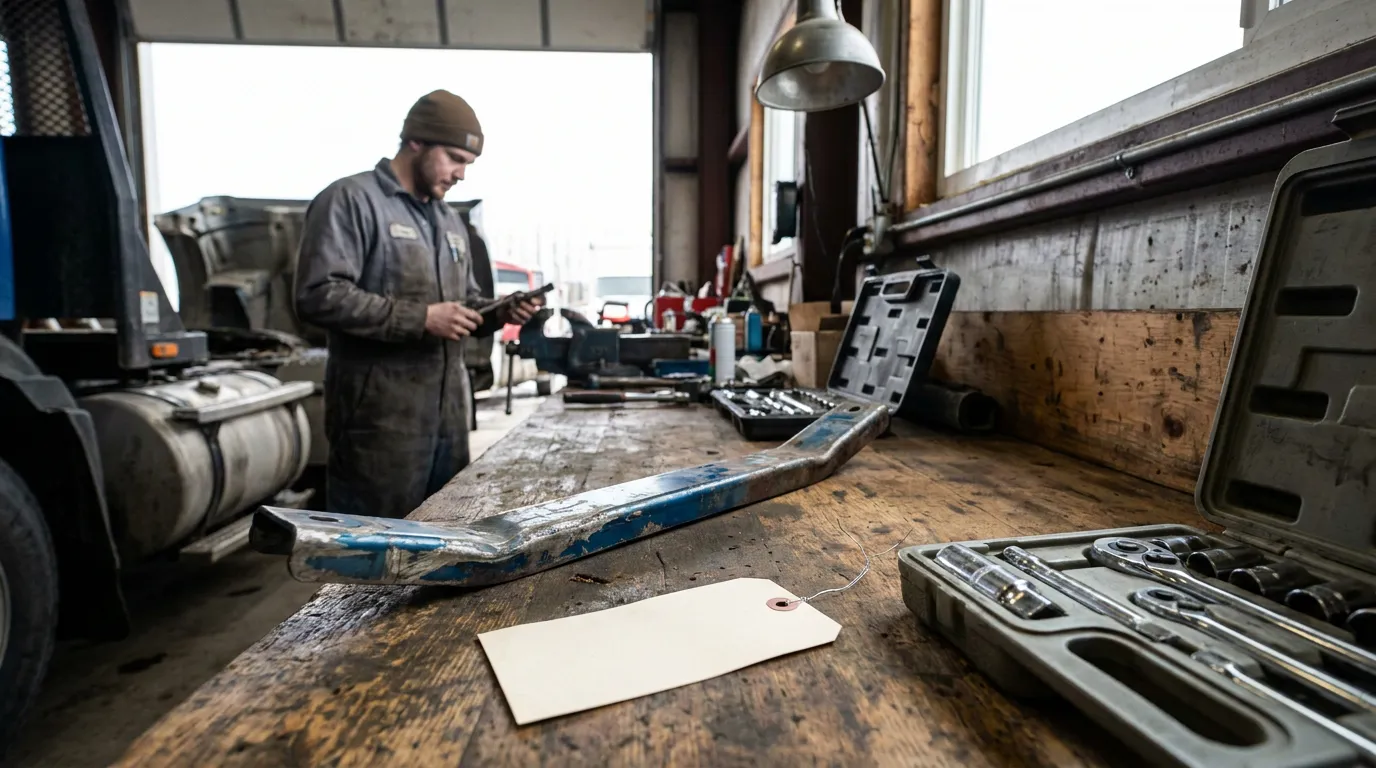
The core of proving defect is often a side-by-side comparison between the guard that failed and the specifications it was required to meet. Reconstruction professionals and mechanical engineers typically photograph and measure the guard in place, document weld conditions, and record ground clearance and lateral coverage, comparing these against the rear impact guard performance standards applicable at the time of manufacture.
Several categories of physical evidence tend to carry the most weight:
- Guard height above the roadway and horizontal width relative to trailer edges
- Weld quality, corrosion, prior repair welds, and cracked or previously bent members
- Deformation patterns showing whether the guard yielded, buckled, or detached at mounting points
- The certification label and whether it remains present and legible
- Maintenance and inspection records showing prior damage reports or deferred repairs
💡 Pro Tip: Photograph the underside and rear face of the trailer before it leaves the scene if safe to do so. Guards are frequently replaced or cut away during recovery, and those images may become the only record of pre-repair condition.
What Missing or Illegible Labels Can Reveal
Certification labels matter more than most people expect. The Commercial Vehicle Safety Alliance petitioned NHTSA and FMCSA, explaining that current labeling practices result in citations of rear impact guards that physically meet safety requirements but lack a readable label, and the petition requests that the labeling requirement be removed entirely, since labels frequently wear, fade, or are removed during repair and manufacturers will not issue replacement labels.
For an injured claimant, that petition may serve an evidentiary purpose. A missing or unreadable label doesn’t itself prove a defect, but it may support an argument that compliance cannot be verified from the equipment alone, warranting further discovery into build records. A pending petition reflects an industry-recognized concern rather than an adopted requirement, so the label is generally one piece of a broader proof package.
Legal Theories Available in an Underride Guard Failure Claim
An underride guard failure claim in Alaska may proceed on more than one theory at the same time. Product liability principles may reach the trailer or guard manufacturer for design or manufacturing defects. Negligence principles may reach the motor carrier for inadequate inspection or maintenance, and separate claims may exist against the driver. Alaska generally follows pure comparative fault under AS 09.17.060, so an injured person’s own share of responsibility reduces recovery proportionally rather than barring it.
| Potential Defendant | Typical Theory | Evidence Commonly Reviewed |
|---|---|---|
| Trailer or guard manufacturer | Design or manufacturing defect | Design specs, compliance testing, certification records |
| Motor carrier | Negligent inspection or maintenance | Annual inspections, repair orders, driver vehicle inspection reports |
| Repair facility | Negligent repair or modification | Work orders, weld records, parts invoices |
| Driver or employer | Negligent operation | ELD data, hours-of-service logs, dispatch records |
Regulatory violation evidence may also support a negligence per se argument in certain circumstances. Alaska courts follow a Restatement-based approach under which the court decides whether to adopt a regulation as the standard of care, generally asking whether the rule was designed to protect the class of persons injured from the type of harm that occurred; adoption is discretionary and doesn’t eliminate the need to prove causation and damages. NHTSA interpretation letters may clarify how the agency reads FMVSS 223 and 224, which can help show what a manufacturer was required to do, though such letters are not binding on courts and typically function as supporting rather than foundational authority.
Causation Remains a Challenging Element
Establishing that the guard was defective does not automatically establish that the defect caused the injuries. Defense engineers commonly argue the occupants would have sustained the same harm even with a fully compliant guard, particularly at higher speeds. Countering that typically requires reconstruction modeling comparing the actual crash outcome against a simulated collision with a conforming, properly maintained guard, and such testimony must satisfy the court’s admissibility standards for expert evidence. Outcomes are fact-dependent, and reasonable engineers sometimes reach different conclusions from the same data.
Evidence Preservation and Alaska Deadlines
Trailer evidence can disappear quickly, and a spoliation letter is often the first substantive step. Carriers may repair damaged guards within days and return the trailer to service, permanently destroying the most probative evidence. A prompt written demand to preserve the trailer, guard, maintenance files, and electronic data may help protect the claim, and courts may impose sanctions when preservation obligations are ignored.
Alaska generally imposes a two-year limitations period on personal injury actions under AS 09.10.070, and a wrongful death action under AS 09.55.580 must generally be brought within two years of the death. Discovery rules, minority, and other tolling provisions exist but apply only in defined circumstances, so no claimant should assume an extension applies to their situation. Claims involving government entities may trigger separate notice requirements running on shorter, independent timelines. Because these deadlines and exceptions turn on specific facts, they should be confirmed with counsel. Readers exploring related topics can review additional Alaska truck accident resources for context on investigation and claim timing.
💡 Pro Tip: Keep the damaged vehicle itself. Insurers frequently push for a quick total-loss settlement, and once the car is salvaged, the intrusion measurements that demonstrate underride depth may be gone.
Working With Counsel on a Trailer Equipment Defect Case
These claims generally require coordinated work between attorneys, reconstruction engineers, and metallurgical analysts. Counsel handles the legal framework and discovery, while technical consultants evaluate whether the guard met applicable strength, height, and width specifications. An experienced Anchorage injury attorney may also pursue the carrier’s maintenance history and the manufacturer’s testing records through formal discovery, frequently where the strongest defect evidence surfaces.
Practical expectations matter as well. A trailer equipment defect case tends to move more slowly than a straightforward rear-end claim because of the engineering work involved and the number of potential defendants. Nothing here predicts an outcome, and results depend entirely on the particular facts, the available evidence, and the applicable law.
Frequently Asked Questions
1. Does a compliant guard mean I have no claim against the trucking company?
Not necessarily. Compliance with FMVSS 223 and 224 addresses the federal equipment standard, but negligence claims against the driver, carrier, or repair facility may still proceed based on operation, inspection, or maintenance failures.
2. How do I find out who manufactured the rear impact guard?
The certification label, trailer VIN, and manufacturer’s build records generally identify the guard supplier. When the label is missing or unreadable, counsel may need to obtain build sheets or supplier contracts through discovery.
3. Can federal safety standards be used directly as evidence in an Alaska case?
Federal motor vehicle safety standards generally apply uniformly across all states, including Alaska, and evidence of the applicable standard may be offered to establish the performance baseline, subject to the rules of evidence. How a court treats a violation depends on the governing legal standards and the record presented.
4. What if the trailer was already repaired before I hired an attorney?
The case may still be viable. Photographs, inspection reports, repair invoices, replaced parts, and the striking vehicle’s damage profile can sometimes support a reconstruction even without the original guard, though the analysis becomes more difficult.
5. Who pays if both the driver and the manufacturer share responsibility?
Alaska’s comparative fault framework generally allows a jury to apportion responsibility among the parties and certain non-parties. Alaska has largely replaced joint and several liability with several liability under AS 09.17.080, meaning each defendant is generally responsible only for its own allocated share, subject to statutory exceptions.
Turning Regulatory Standards Into a Provable Claim
Proving that a defective rear impact guard contributed to an Anchorage crash generally comes down to three things: preserving the trailer and guard before they are altered, measuring the equipment against the federal standards that applied when it was built, and developing causation testimony connecting the failure to the specific injuries. Federal rulemaking on guard strength, the CVSA labeling petition, and NHTSA’s interpretive guidance may all supply supporting authority for this analysis, but none substitutes for prompt investigation, since the physical evidence often has a short shelf life.
You do not need to sort through federal regulations on your own while recovering from a serious injury. Reach out to Farnsworth & Vance in Anchorage to have your situation reviewed. Call 907-290-8980 or request a case review to get started.
Disclaimer: This content is for informational purposes only and is not legal advice. Every case is unique, and results may vary. Consult an attorney about your specific circumstances.


