
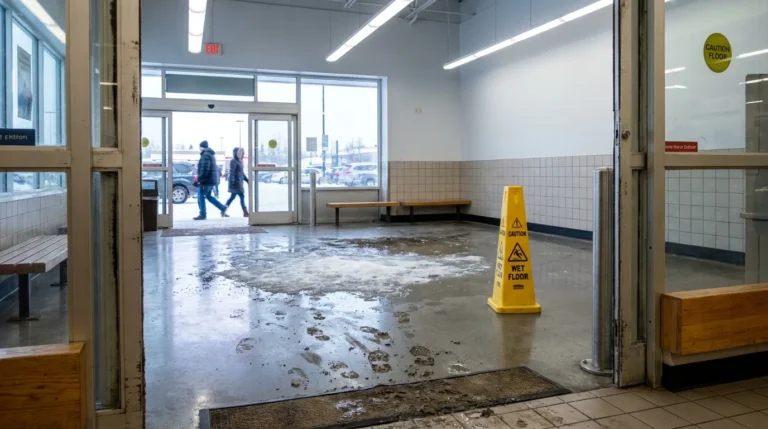
Understanding Your Rights After a Fall on Someone Else’s Property in Alaska
Key Takeaways: To prove property owner negligence in an Alaska slip and fall, you must show the owner knew or should have known about a dangerous condition, failed to fix it or warn you, and that this failure caused your injury. Premises liability requires duty, breach, causation, and damages, with the notice requirement often being decisive. Evidence gathered early, photographs, incident reports, witness statements, maintenance logs, and medical records, is critical, especially given Alaska’s winter hazards. Alaska’s pure comparative fault system allows recovery even when you share blame, though your award is reduced proportionally. Available damages include economic and noneconomic losses, with noneconomic damages generally capped at the greater of $400,000 or life expectancy multiplied by $8,000, rising to the greater of $1,000,000 or life expectancy multiplied by $25,000 for severe permanent physical impairment or disfigurement. Claims must be filed within Alaska’s two-year statute of limitations.
Proving property owner negligence in an Alaska slip and fall requires you to show that the owner knew or should have known about a dangerous condition, failed to fix it or warn you, and that this failure caused your injury. Property owners have a duty to keep their premises reasonably safe. When they fail and someone suffers a serious injury, the law allows the injured person to seek compensation. This article explains how liability works, what evidence matters, and how Alaska’s civil rules shape claim value.
If you were seriously hurt, the team at Farnsworth & Vance can review the facts with you. Call us at 907-290-8980 or reach out through our online contact page to speak with an Alaska attorney about your situation.
The Legal Foundation for Premises Liability Alaska Claims
Premises liability in Alaska is a form of negligence governed by the state’s Code of Civil Procedure. To recover, an injured person must establish four elements: duty of care, breach of that duty, causation, and measurable damages. Property owners owe visitors a duty to maintain reasonably safe conditions and to address or warn about hazards they know about or should discover through reasonable care.
The specific duty owed can depend on the property type and the visitor’s reason for being there. Alaska’s statutory framework is set out in the Title 9 Code of Civil Procedure. One provision worth noting is AS 09.65.200, which grants limited immunity to owners of unimproved land, providing that such an owner "is not liable in tort, except for an act or omission that constitutes gross negligence or reckless or intentional misconduct." This shows why land classification is an early question in any case.
How to Prove Negligence Alaska Property Owners Owe Visitors
Establishing a dangerous condition Alaska property owner liability claim usually turns on the notice requirement. The injured person must show that the owner had actual notice of the hazard or constructive notice, meaning the condition existed long enough that a reasonable owner should have found and corrected it. A puddle that formed seconds before a fall is treated differently than an icy walkway that went untreated for days.
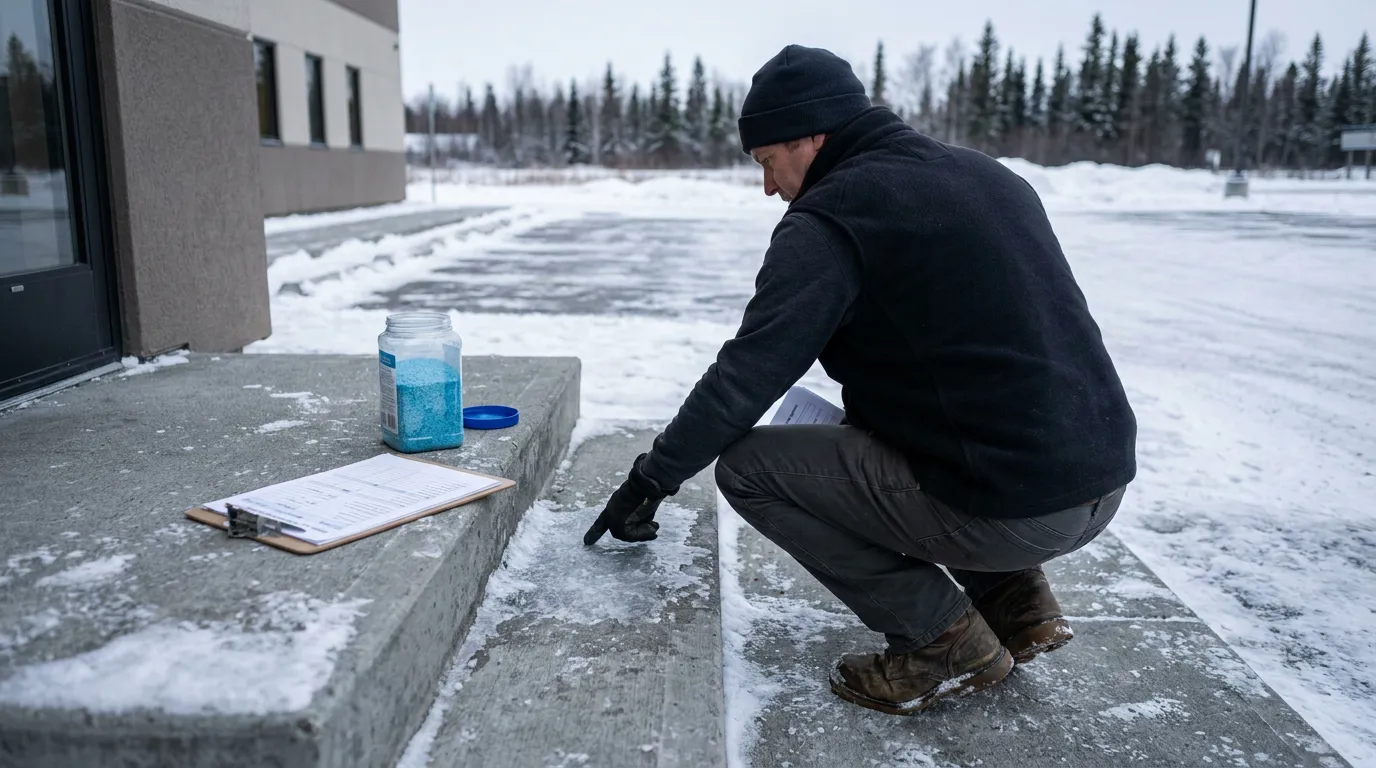
Building the notice picture takes evidence gathered close to the incident. Critical proof includes:
- Photographs or video of the hazard, the surrounding area, and any missing warning signs
- Incident reports filed with the store or property manager
- Names and statements from witnesses who saw the condition or the fall
- Maintenance logs, inspection records, and prior complaints about the same area
- Medical records tying your injuries directly to the fall
Winter conditions add complexity to notice and reasonableness questions. Snow and ice accumulation, the timing of removal efforts, and whether the owner followed a reasonable maintenance routine all come into play. Our guide on proving negligence in a winter slip and fall case walks through the additional evidence issues that Alaska’s climate creates.
💡 Pro Tip: Preserve evidence quickly. Hazards get cleaned up and surveillance footage is often overwritten within days, so requesting preservation early can protect proof that later becomes central to your claim.
Comparative Fault and How It Affects Slip and Fall Accident Claims in Alaska
Alaska follows a pure comparative fault system, which means your own conduct can reduce but not eliminate your recovery. Under AS 09.17.900, "fault includes acts or omissions that are in any measure negligent, reckless, or intentional," and it also covers an "unreasonable failure to avoid an injury or to mitigate damages." If a property owner argues you were not watching where you walked, that argument goes to the percentage of fault assigned to you rather than barring the claim outright.
The jury allocates fault by percentage among everyone responsible. Under CSHB 158(FIN), the bill amends AS 09.17.080(a) to require the jury to indicate the percentage of total fault allocated to each claimant, defendant, third-party defendant, and other person responsible for the damages. A separate section of the bill amends AS 09.17.080(c) to provide that the court determines each party’s equitable share of the obligation to each claimant in accordance with the respective percentages of fault. If you are found 20 percent at fault, your award is reduced by that share.
Fault allocation directly changes what you recover, so evidence framing matters. Working with an Anchorage slip and fall lawyer who understands local courts can help present facts that keep focus on the owner’s failures. Two of the attorneys at Farnsworth & Vance are former insurance defense litigators, and they use that background to anticipate how insurers shift blame onto injured people.
Damages Available in an Alaska Injury Claim
Alaska law separates recoverable damages into distinct categories. Under CSHB 158(FIN), Sec. 8 amending AS 09.17.040(a), a verdict "shall be itemized between economic loss and noneconomic loss," listing past and future economic loss, past and future noneconomic loss, and punitive damages. Economic losses cover medical bills, future care, and lost wages, while noneconomic losses cover pain, physical impairment, disfigurement, and loss of enjoyment.
Alaska caps noneconomic damages, affecting claim value even when negligence is clear. Under AS 09.17.010, noneconomic damages arising from a single injury generally "may not exceed $400,000 or the injured person’s life expectancy in years multiplied by $8,000, whichever is greater," rising to "$1,000,000 or the person’s life expectancy in years multiplied by $25,000, whichever is greater, when the damages are awarded for severe permanent physical impairment or severe disfigurement." These caps are why serious, lasting harm must be documented carefully.
Punitive damages exist but are difficult to obtain. Under CSHB 158(FIN), Sec. 6 amending AS 09.17.020, punitive damages require "clear and convincing evidence of outrageous conduct, including acts done with malice or bad motives, or reckless indifference to the interest of another person." One-half of any punitive damages award is paid to the State of Alaska.
| Damage Category | What It Covers | Key Limitation |
|---|---|---|
| Economic loss | Medical bills, future care, lost wages | Must be itemized and proven |
| Noneconomic loss | Pain, impairment, loss of enjoyment | Generally capped at the greater of $400,000 or life expectancy × $8,000; higher cap of the greater of $1,000,000 or life expectancy × $25,000 for severe permanent impairment or disfigurement |
| Punitive damages | Punishment for outrageous conduct | Requires clear and convincing evidence; half paid to the State |
The Two-Year Deadline and Why Fall Injuries Are a Serious Concern
Alaska generally imposes a two-year statute of limitations on personal injury claims. Under AS 09.10.070, a person generally may not bring an action for personal injury "unless the action is commenced within two years of the accrual of the cause of action." Missing that window generally bars recovery, though limited exceptions may apply in certain circumstances. Courts interpret these exceptions narrowly.
Falls are a growing safety concern, especially for older adults. According to the CDC’s fall injury data, falls are the leading cause of injury for adults ages 65 and older, with more than 14 million older adults reporting falls annually. The age-adjusted fall death rate rose from roughly 65 per 100,000 in 2018 to over 78 per 100,000 in 2024, an increase of over 20 percent. These numbers underscore why untreated hazards can lead to catastrophic outcomes.
Frequently Asked Questions
1. How long do I have to file a slip and fall lawsuit in Alaska?
In most cases, you have two years from the date of injury. This deadline is separate from any insurance claim process and is interpreted strictly. Limited exceptions may extend the window, but you should not count on them applying.
2. What if I was partly at fault for my fall?
You can still recover under Alaska’s pure comparative fault rule. Your award is reduced by your percentage of fault rather than eliminated. The outcome depends on the evidence presented.
3. How do I prove the property owner knew about the hazard?
You generally show actual or constructive notice. Maintenance records, prior complaints, and evidence of how long the condition existed help establish that a reasonable owner should have addressed it. Photographs and witness statements taken early are often decisive.
4. Why should I hire a local Alaska firm instead of an out-of-state one?
Local counsel knows Alaska courts, statutes, and winter conditions. A firm based here can meet with you in person and investigate the scene directly. That local presence often matters in how a claim is built.
5. Are punitive damages common in these cases?
No, they are rare. They require clear and convincing evidence of outrageous or reckless conduct, and half of any award goes to the State. Most slip and fall recoveries involve economic and noneconomic damages instead.
Moving Forward With Your Alaska Slip and Fall Claim
Successful slip and fall accident claims in Alaska depend on prompt evidence preservation, clear understanding of the notice requirement, and honest attention to comparative fault and damage caps. The law provides a path to recovery for people who suffer serious harm because a property owner ignored a known hazard, but outcomes depend on the specific facts. Acting within the two-year deadline and documenting your injuries thoroughly gives your claim its strongest footing.
If you or a family member suffered a severe injury in a fall on someone else’s property, the attorneys at Farnsworth & Vance are ready to talk through the details with you. Call 907-290-8980 or use our secure contact form to schedule a conversation about your Alaska injury claim.